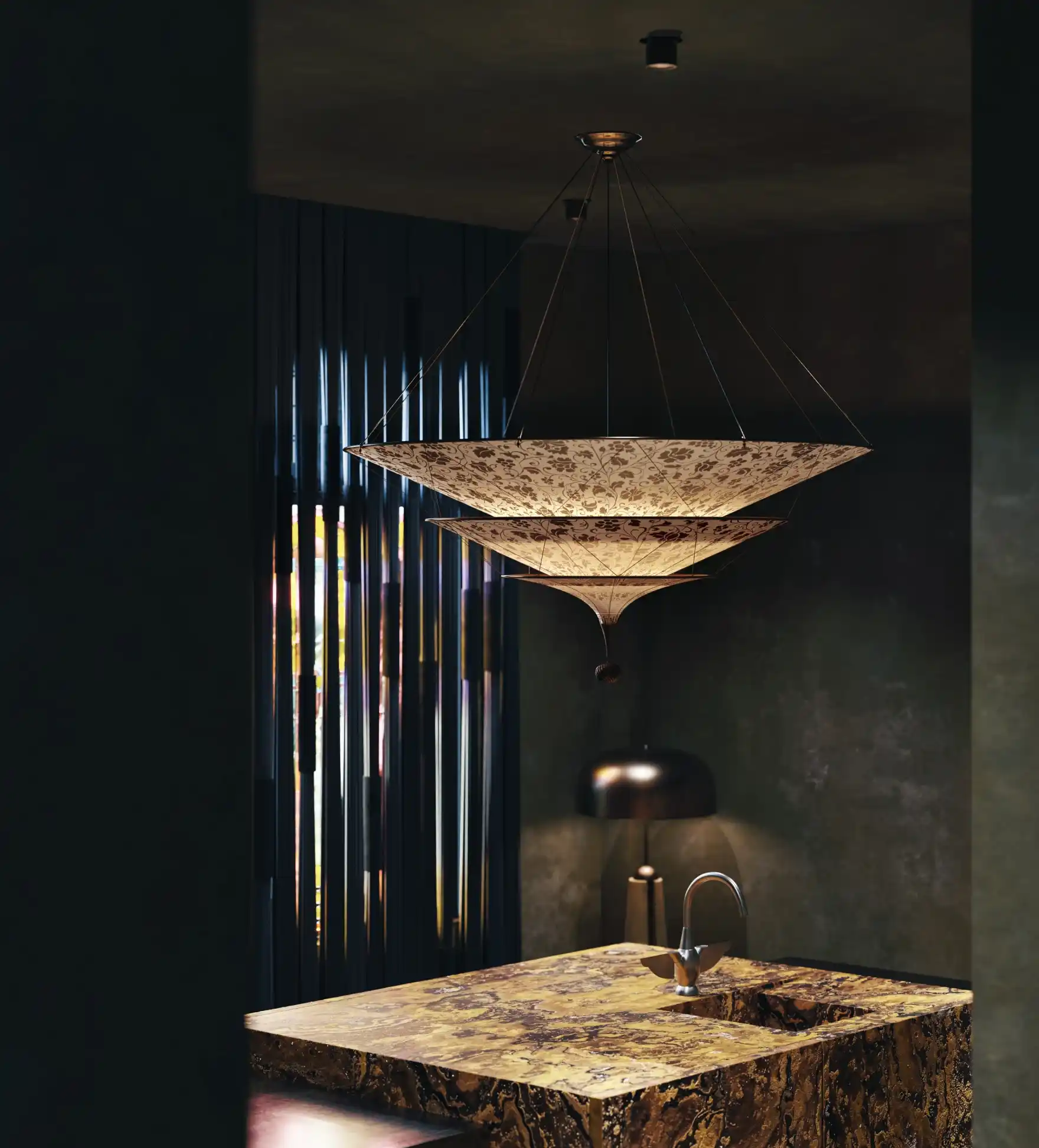
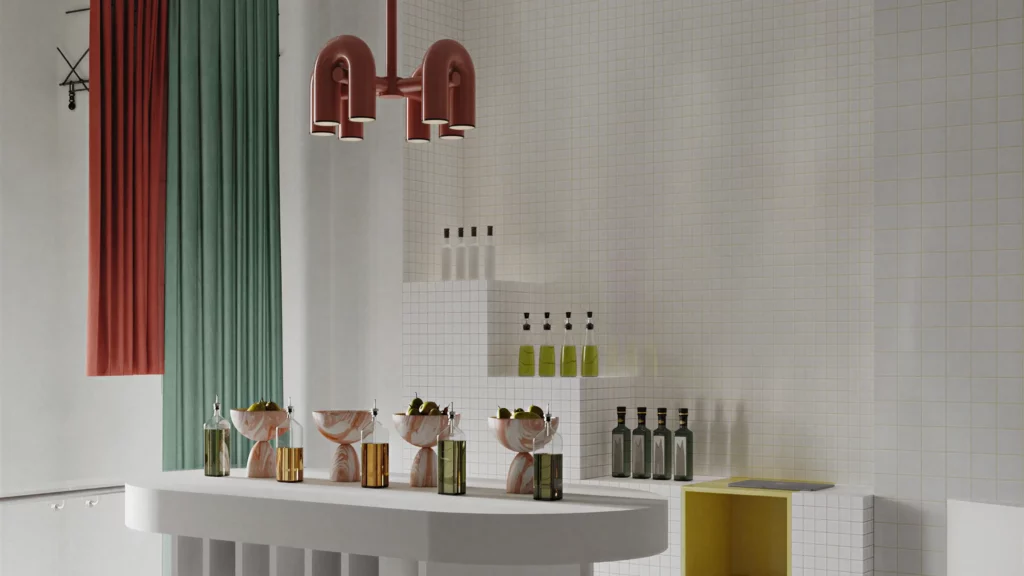
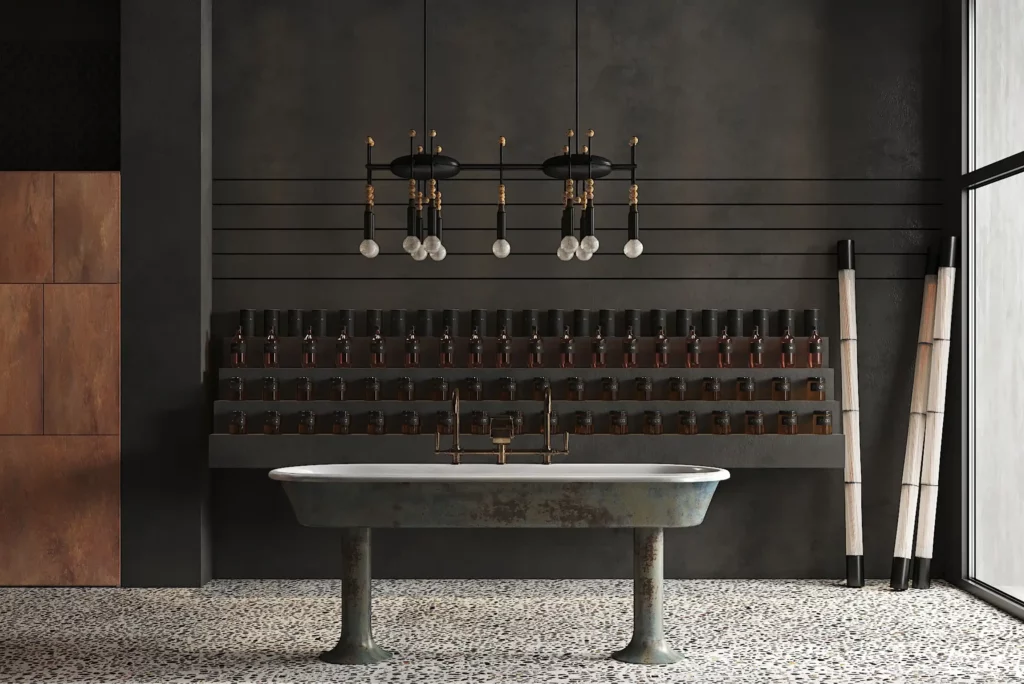
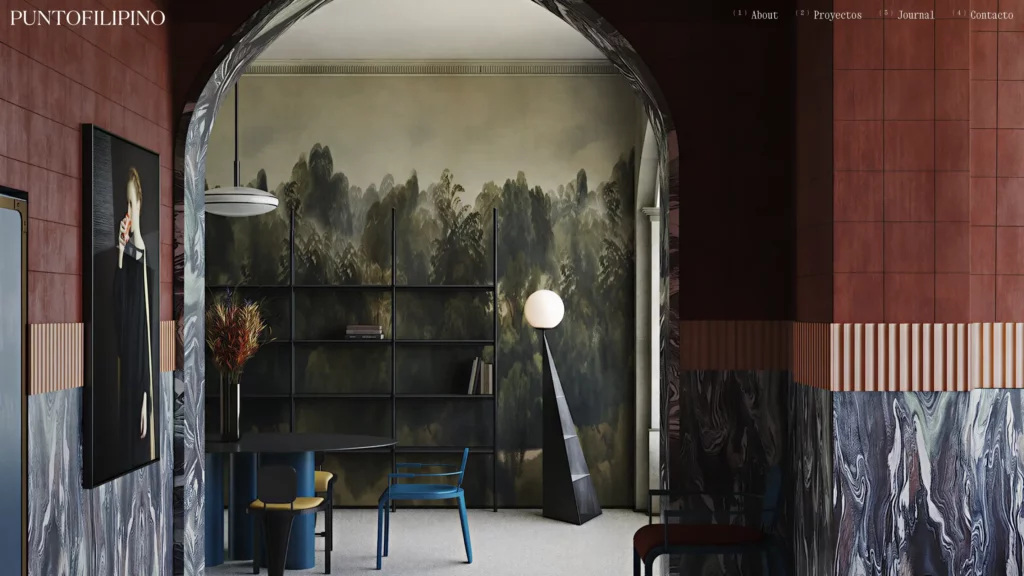
The project takes its name from an ancestral Aymara word that defines the most private part of our lives: that which we do not share with anyone. From that idea, Puntofilipino develops interior architecture that is not immediately apparent, but is revealed progressively through filters, enclosures, and material choices.
JASAMATA doesn't understand housing as a functional container, but as a spatial dramaturgy. The house is articulated as a journey from the open to the protected, from the shared scene to the intimate core. Each room answers an essential question: what is shown, what is reserved, and what remains sheltered.
Materiality acts as a guiding thread. Burnished metals, dark woods, expressive stone, artisan ceramics, textiles imbued with memory, and surfaces with fragmented reflections construct a dense, tactile, and profoundly emotional atmosphere. Light does not illuminate generically; it directs the gaze, introduces pauses, and accentuates the ceremonial nature of the space.
In JASAMATA, luxury is not expressed as excess, but as depth. The project proposes an introspective domesticity, where the house becomes private territory, an interior landscape, and a habitable form of memory.