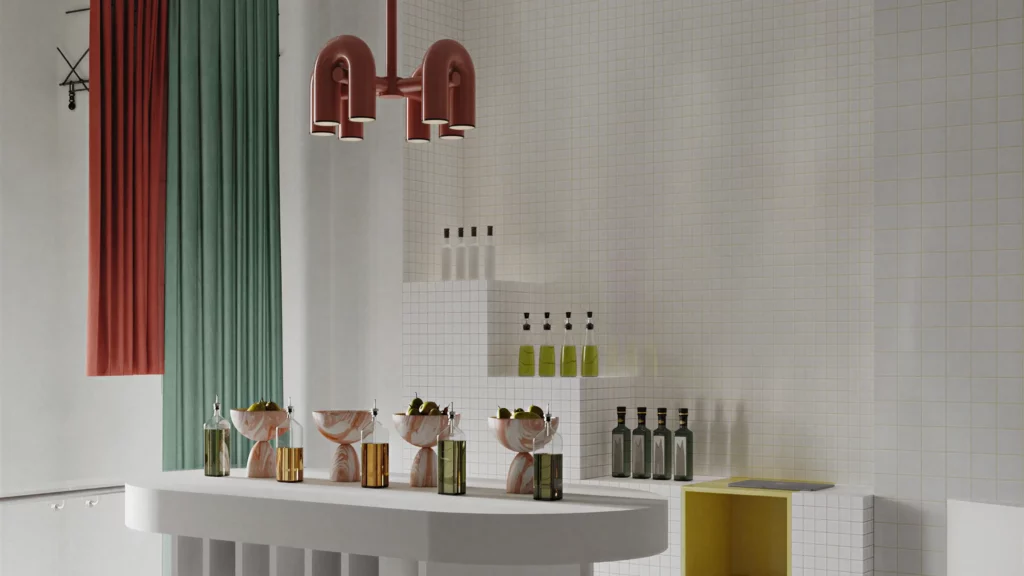
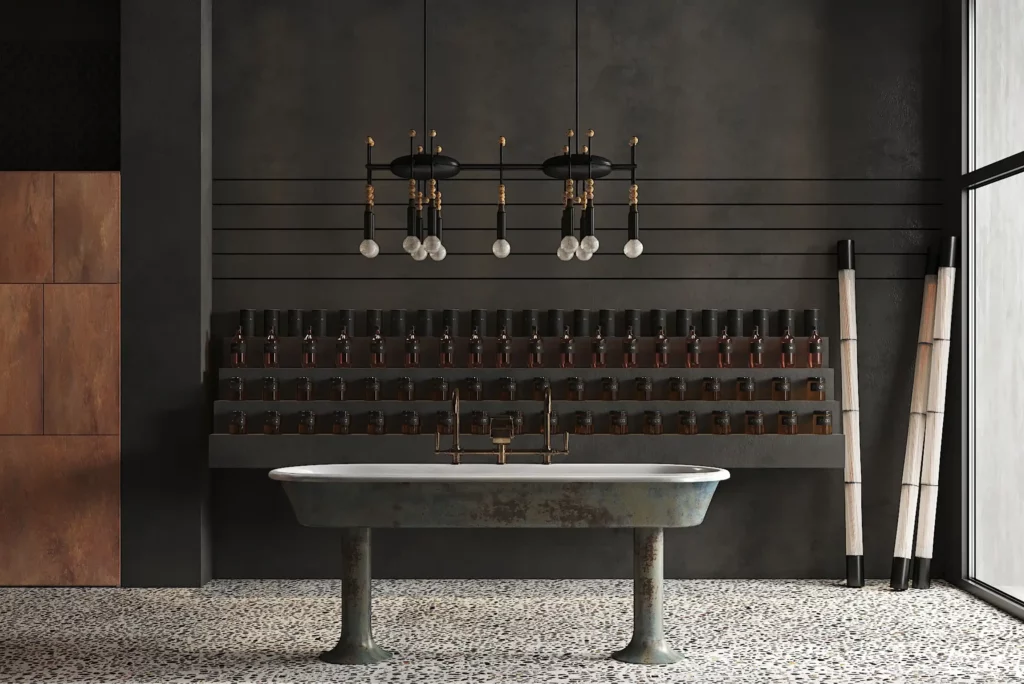
Access is a crack.
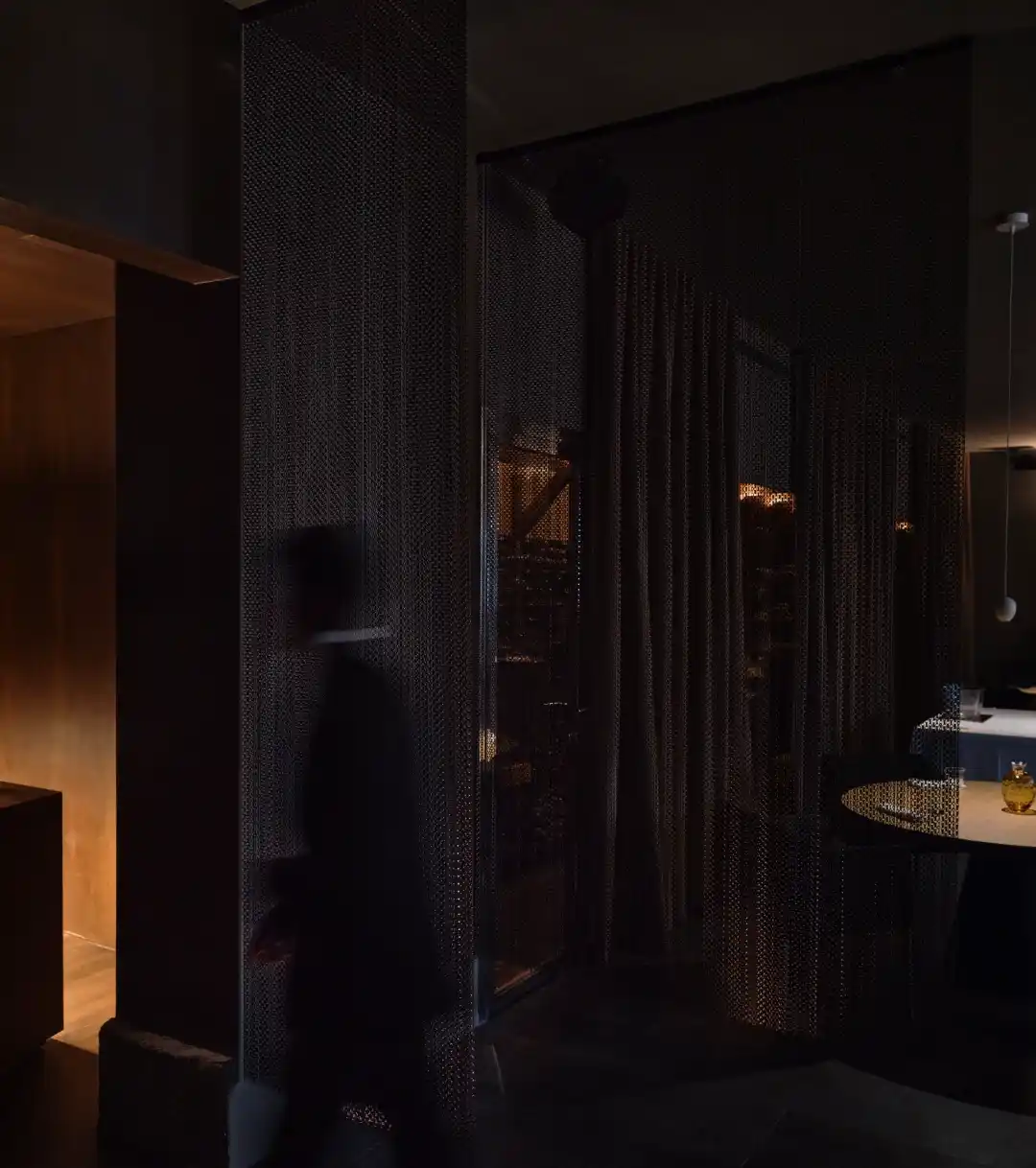
A fissure of light that introduces the diner into a sequence of spaces where architecture ceases to be understood as a container and begins to operate as a path.
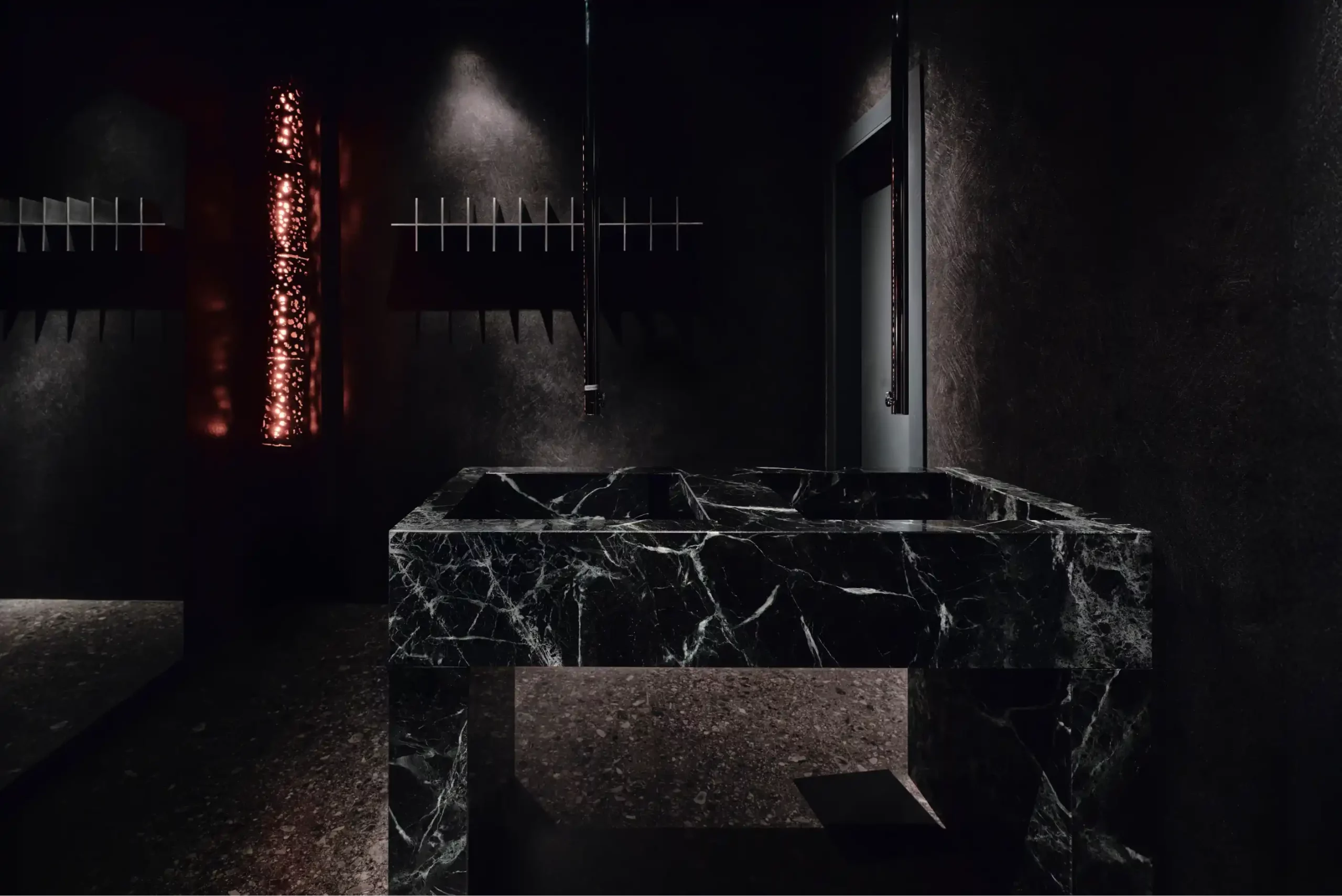
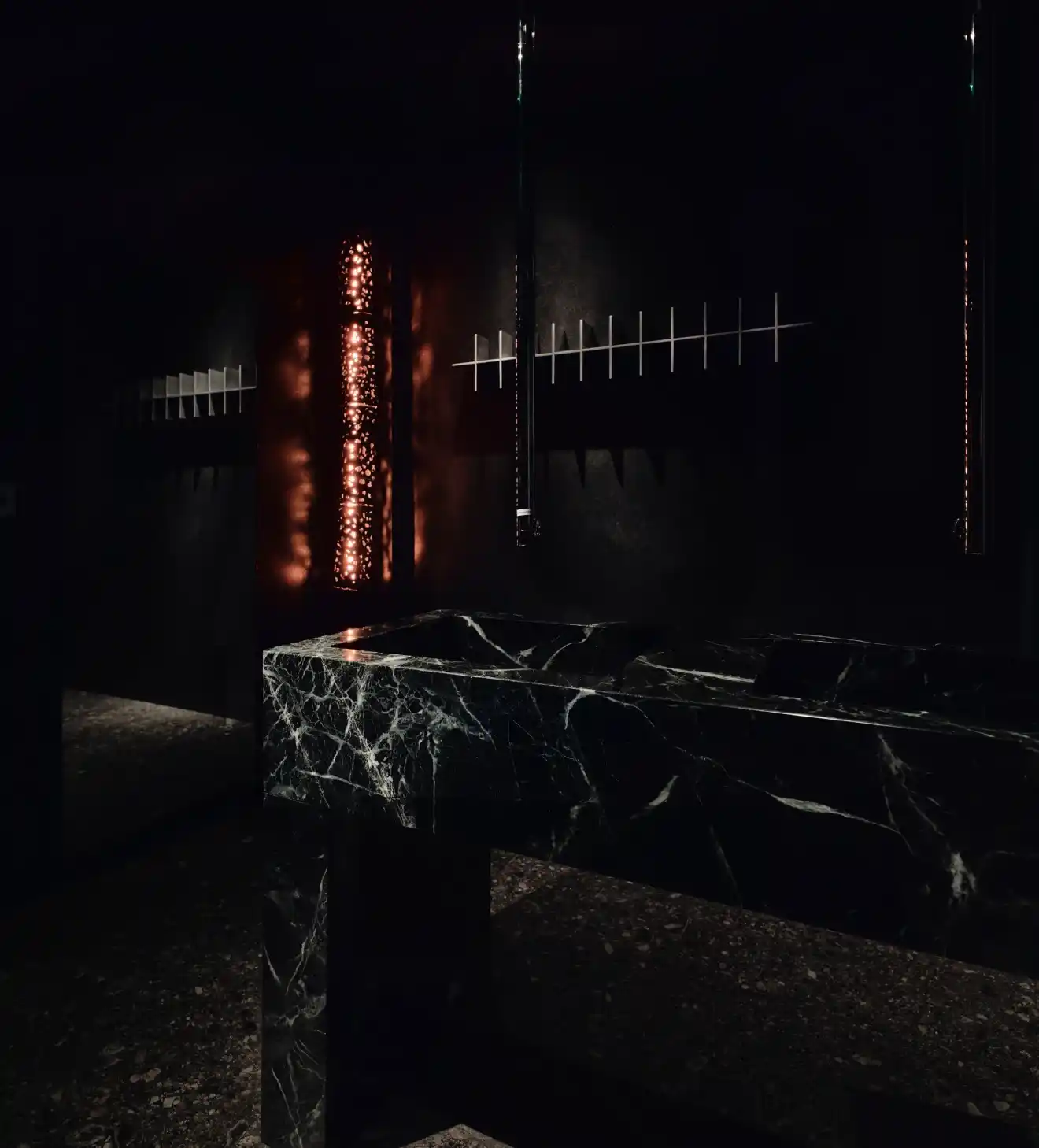
Matter defines the base.
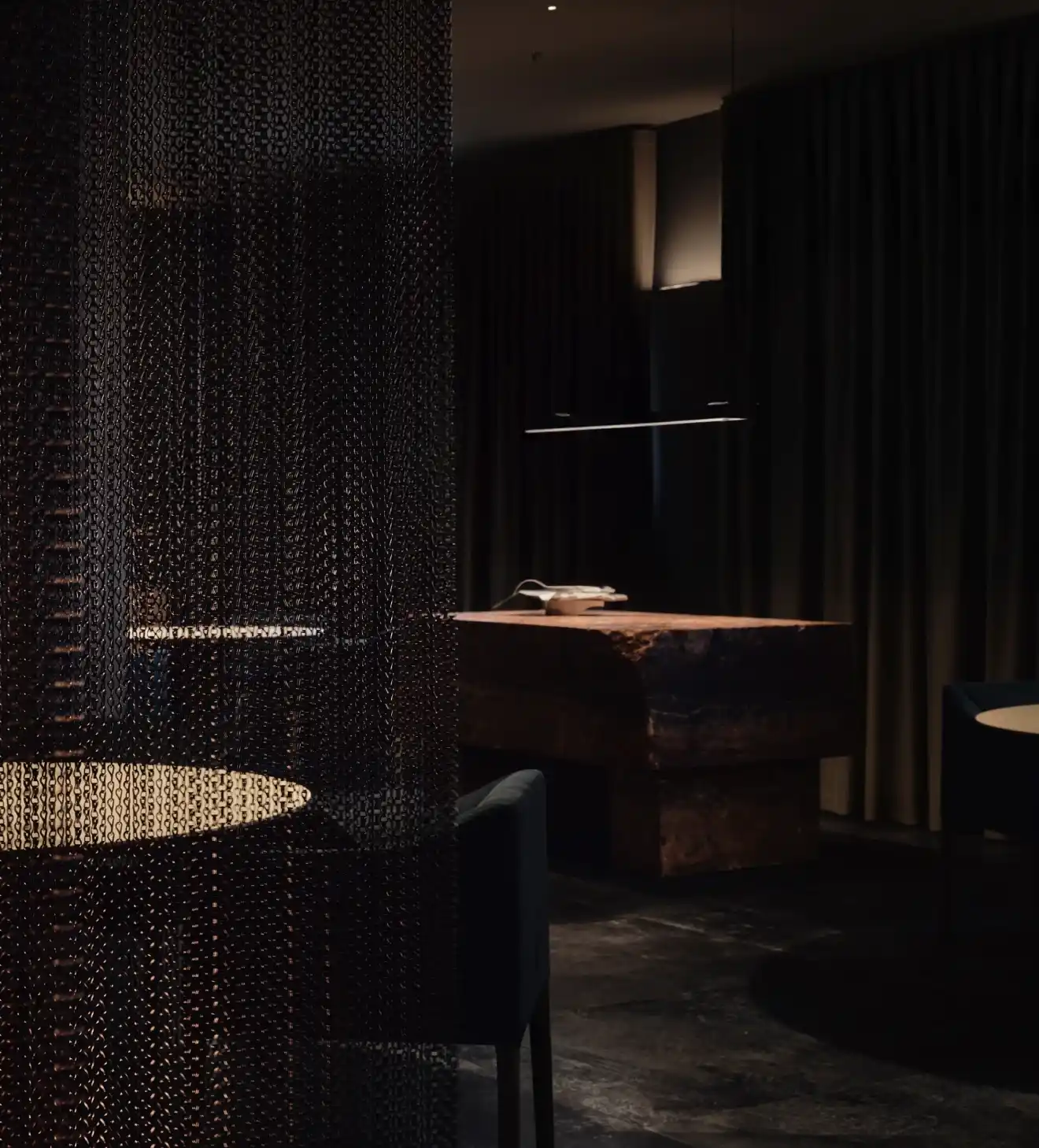
Dense surfaces, mineral tones, and rock-like textures build a profound continuity. The light is not uniform: it appears, filters through, and disappears, marking the rhythm and modulating the experience.
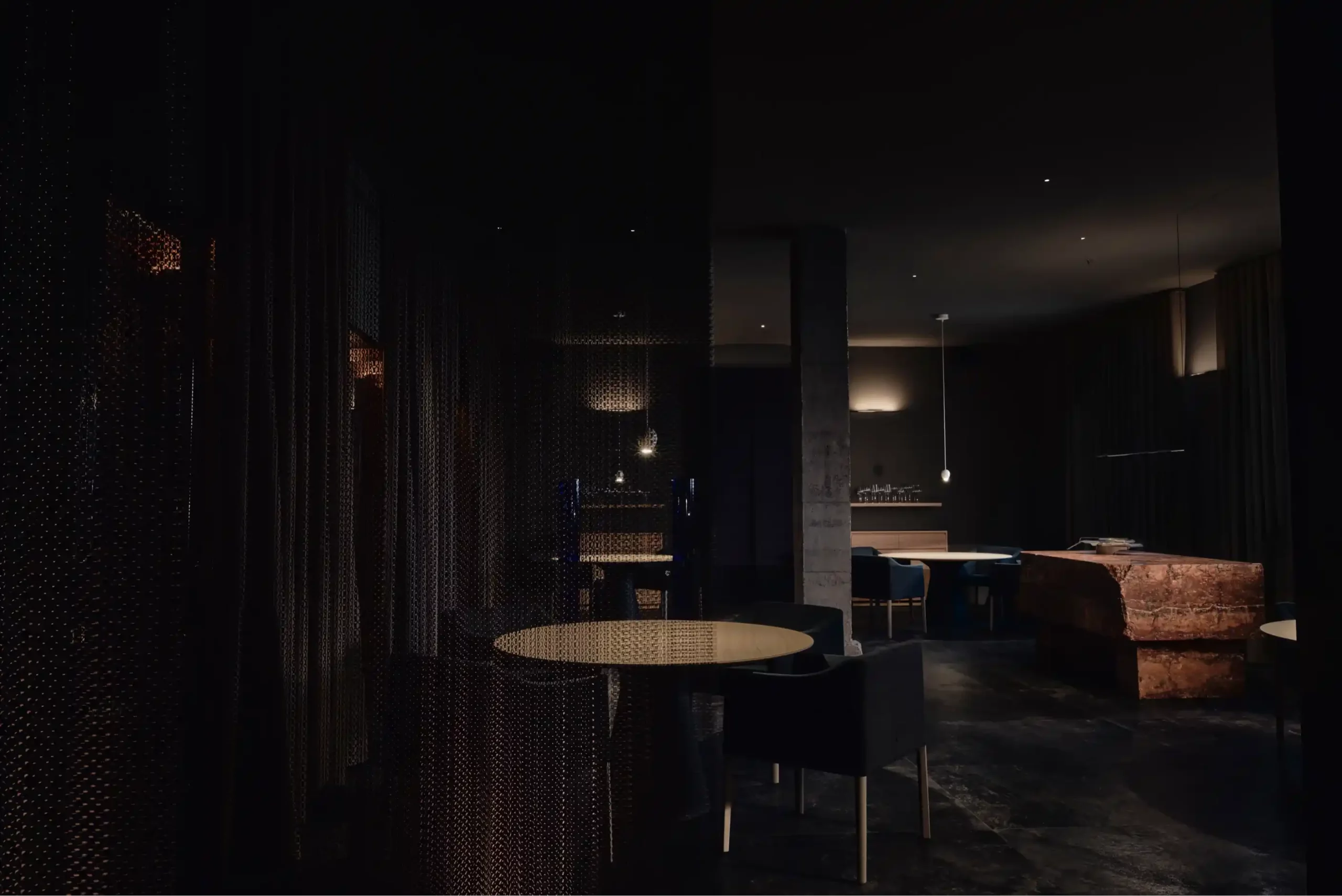
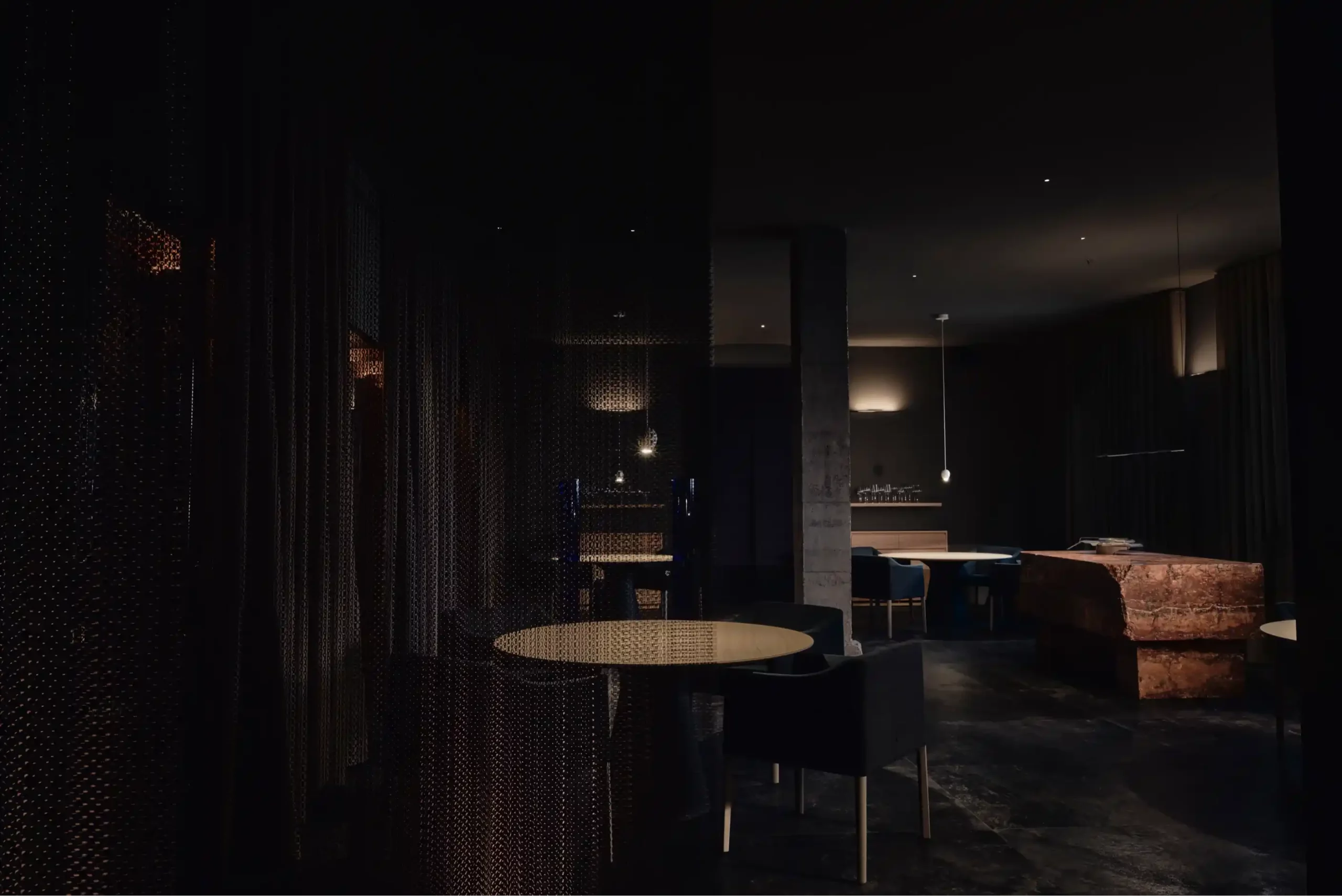
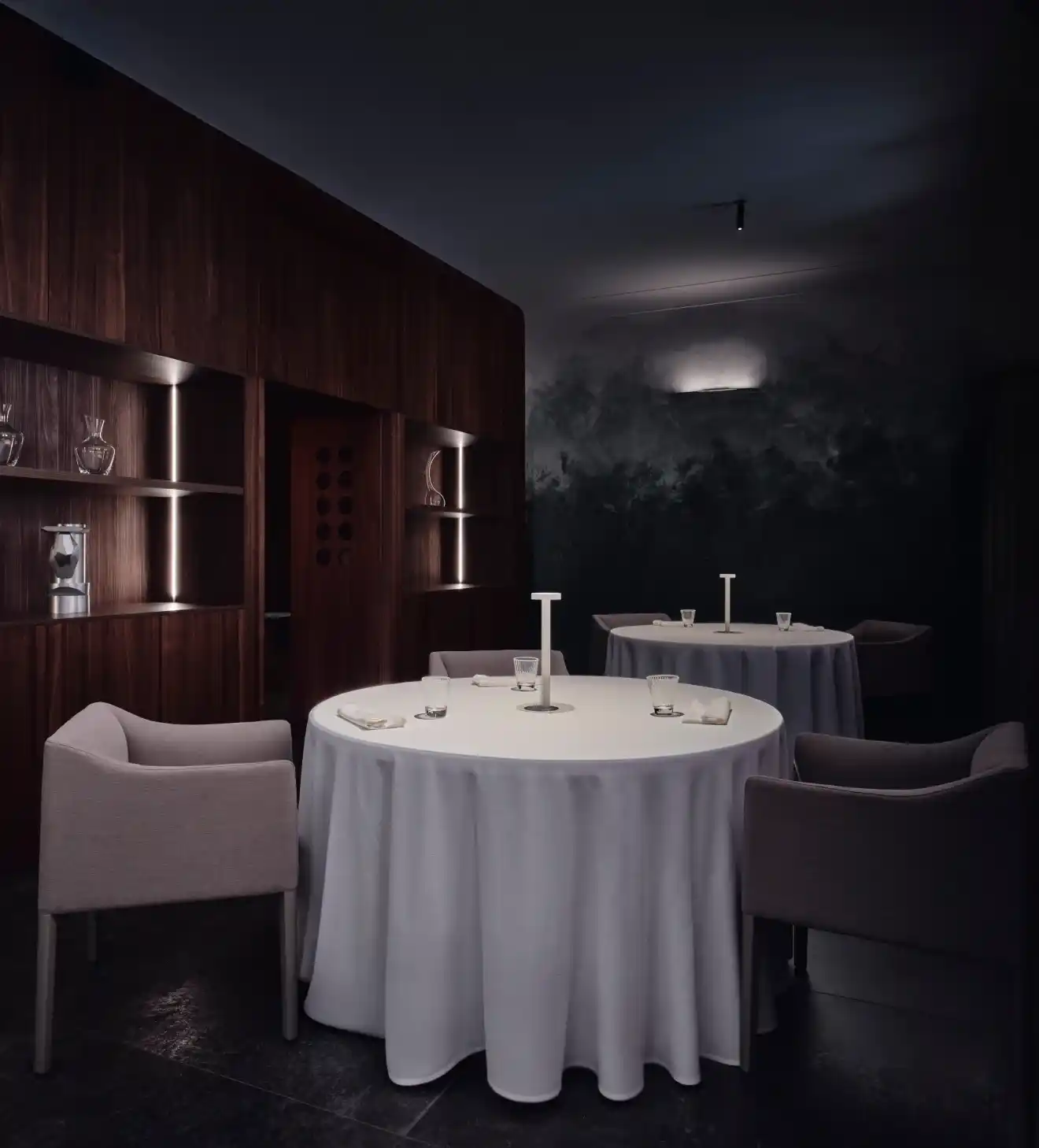
The project is organized as a succession of atmospheres.
Each room proposes a specific condition, built from variations in scale, light temperature, and relationship with the body. There is no literal representation, but an abstract interpretation of the depth, pressure, and density of the marine-volcanic landscape.
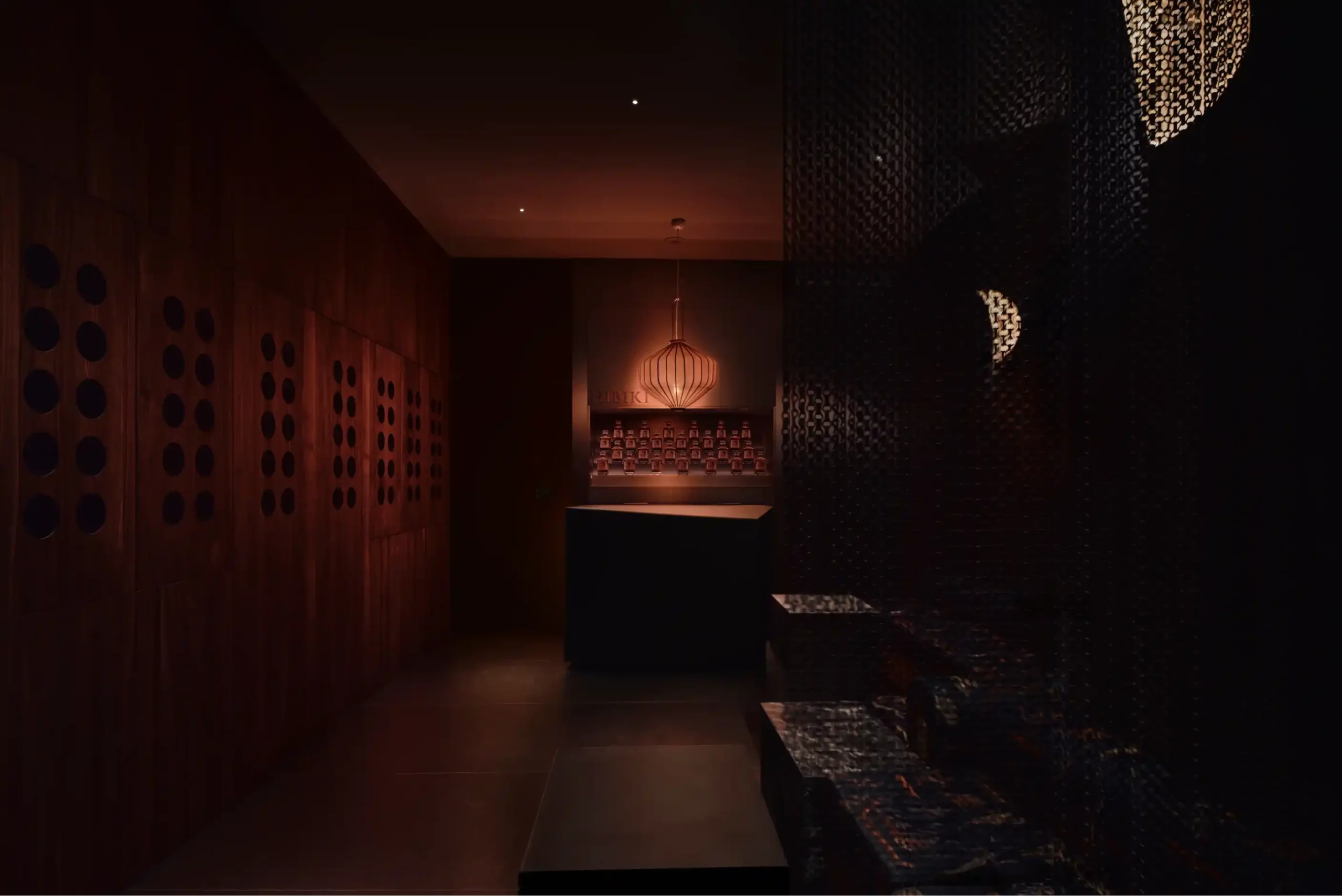
The transition is the main mechanism.
Thresholds, compression changes, and punctual openings construct a journey where each space reconfigures the perception of the previous one.
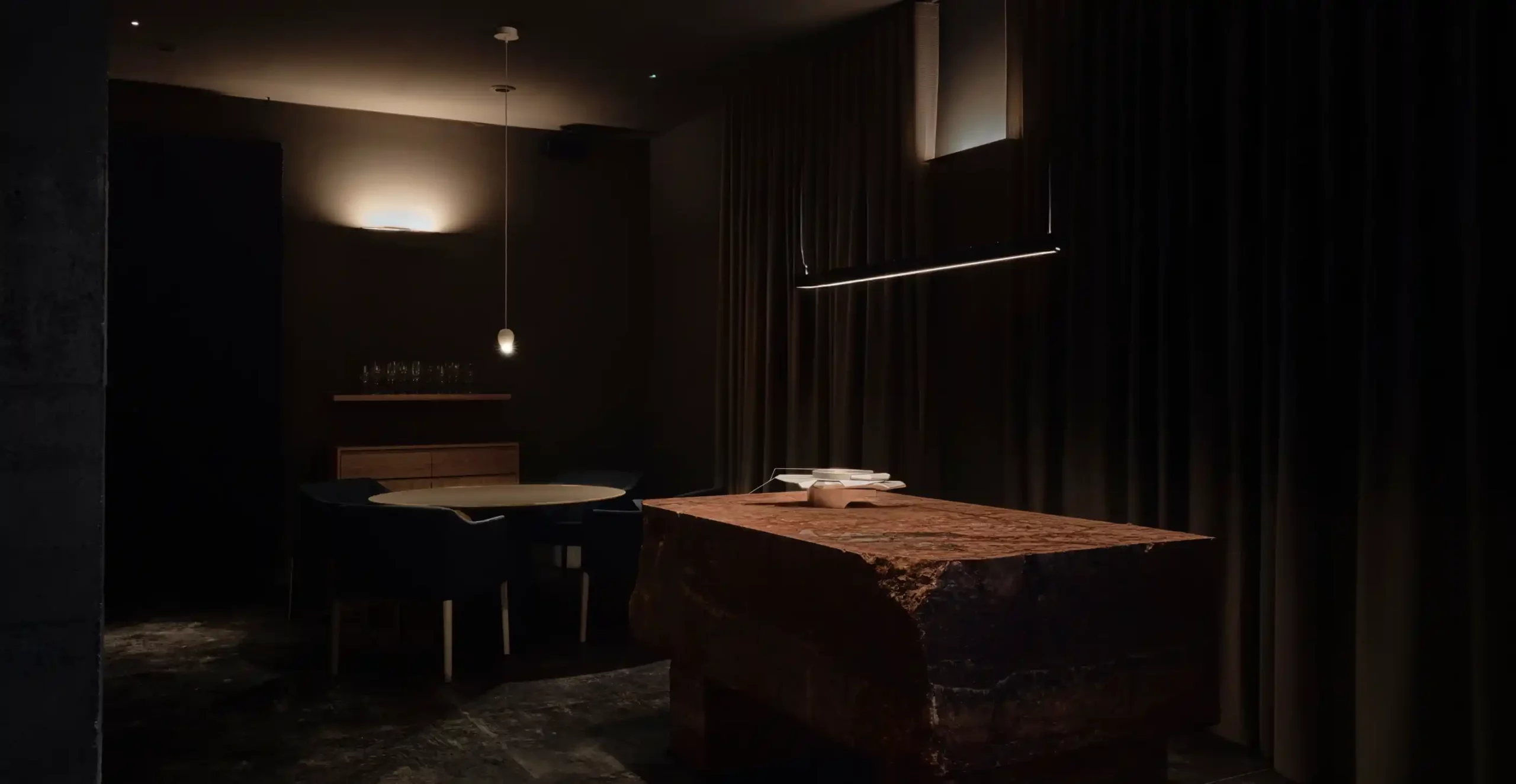
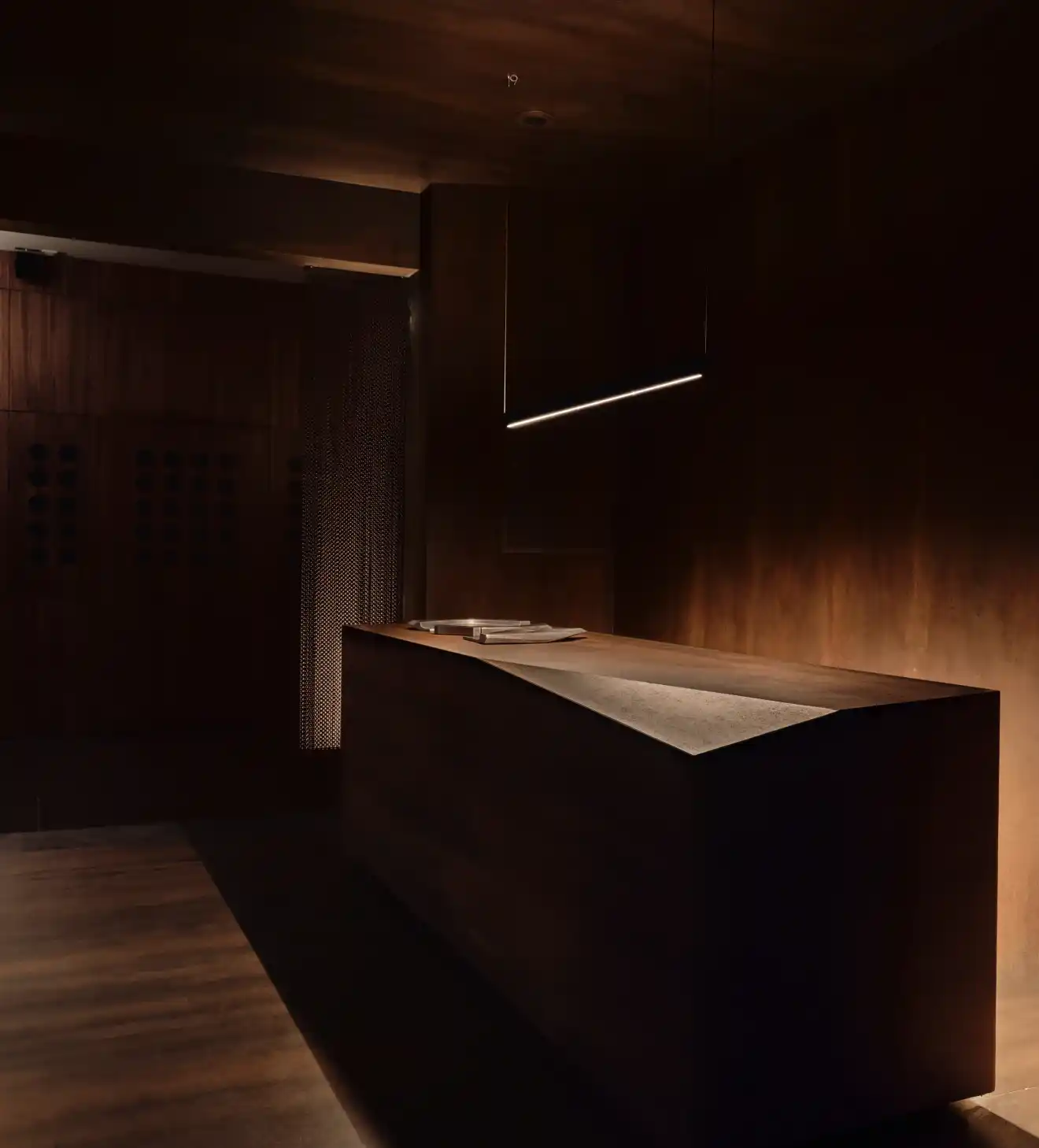
The main hall is built from the material.
A monolith of indigenous stone, designed by the studio, introduces a structural gesture that focuses attention and anchors the space. Scale is reduced, time slows down, and the experience becomes more precise.
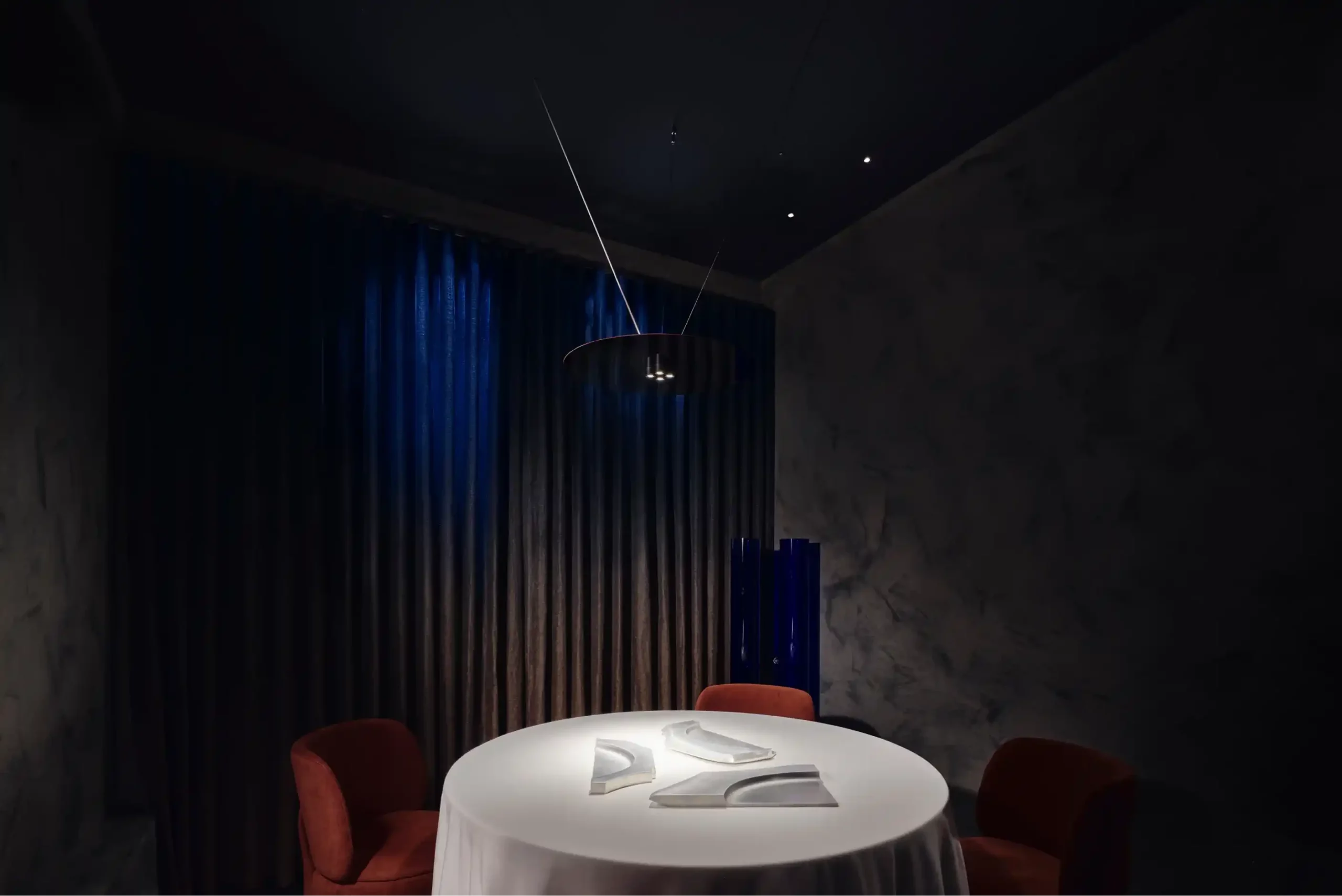
In the temple hall, the scene is articulated through light.
A suspended piece designed by Todomuta Studio, incorporated within a specific curation, organizes the space and defines its reading. It does not act as functional lighting, but as an element that builds atmosphere, rhythm, and direction.
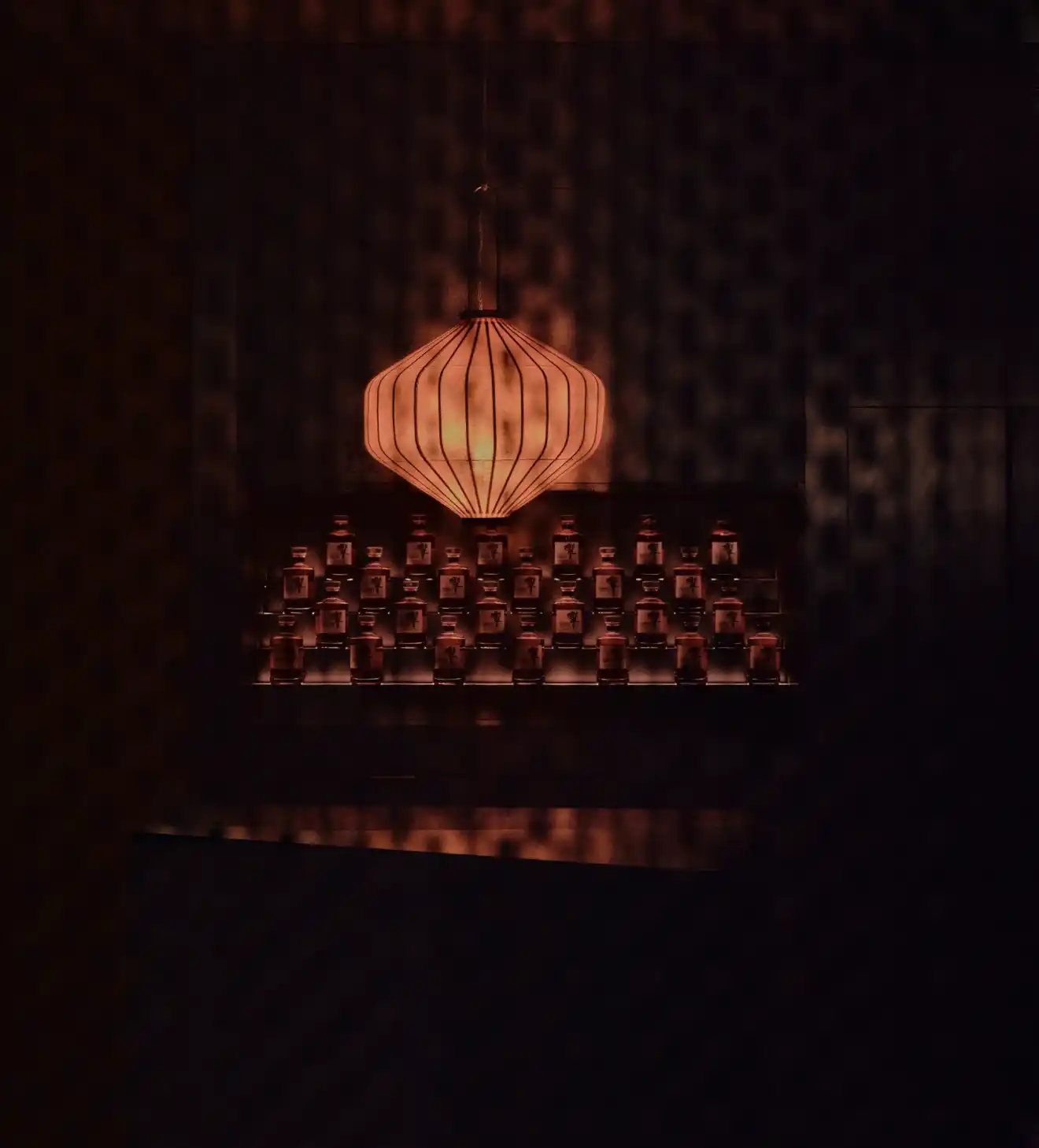
The project integrates a selection of custom-designed pieces and elements that are an active part of the spatial system.
Each object reinforces the material reading and contributes to the construction of the whole.
The sound dimension is an essential part of the journey.
An original composition, developed specifically for the space by a Grammy Award-winning composer, establishes an invisible continuity between rooms and accompanies the experience.
The coast is conceived as an integrated sensory system.
Material, light, and sound operate with precision to generate an experience where architecture and perception intertwine without hierarchies.
Space does not seek to impose itself.
Adjust the perception.
It holds time.