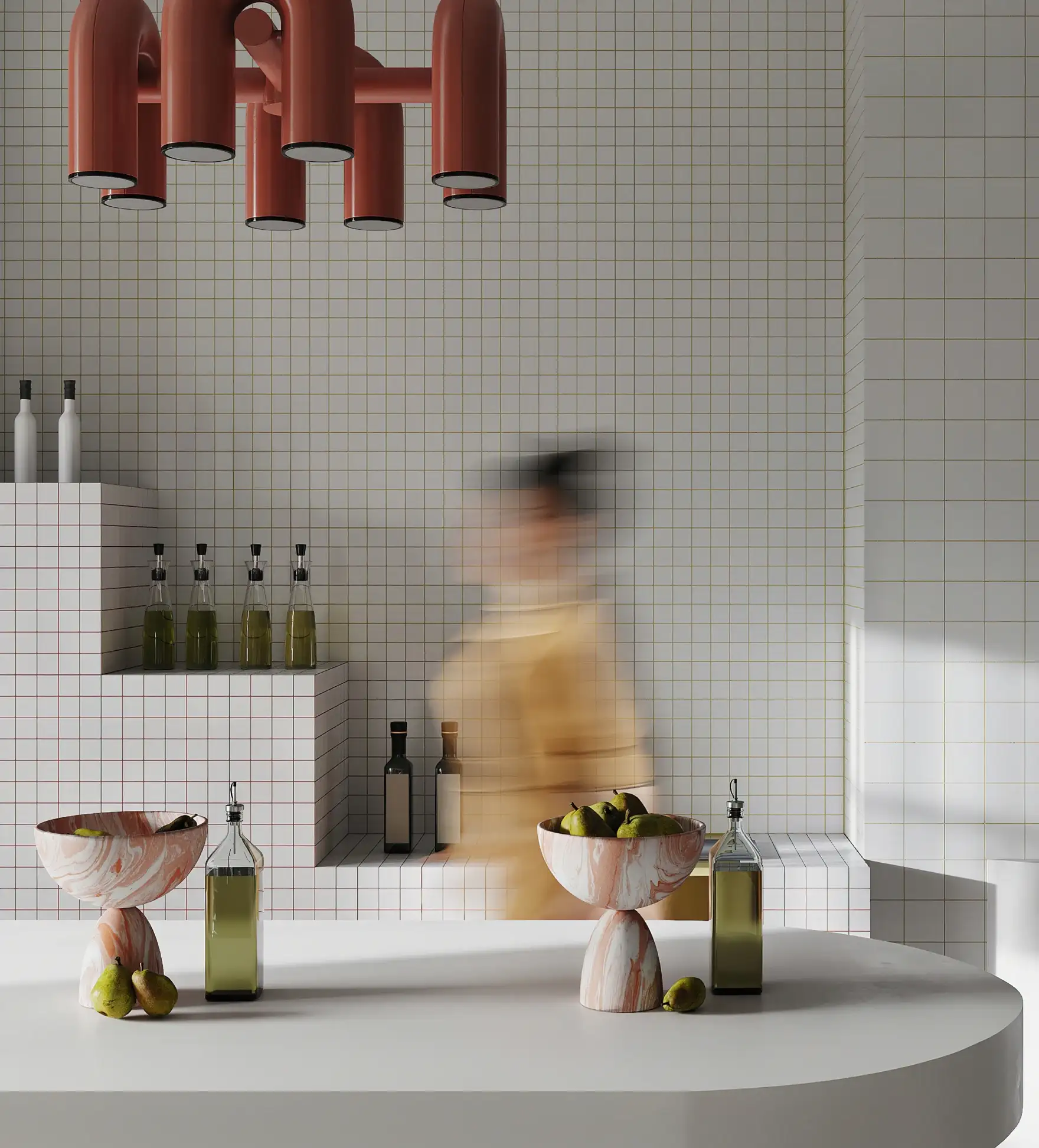
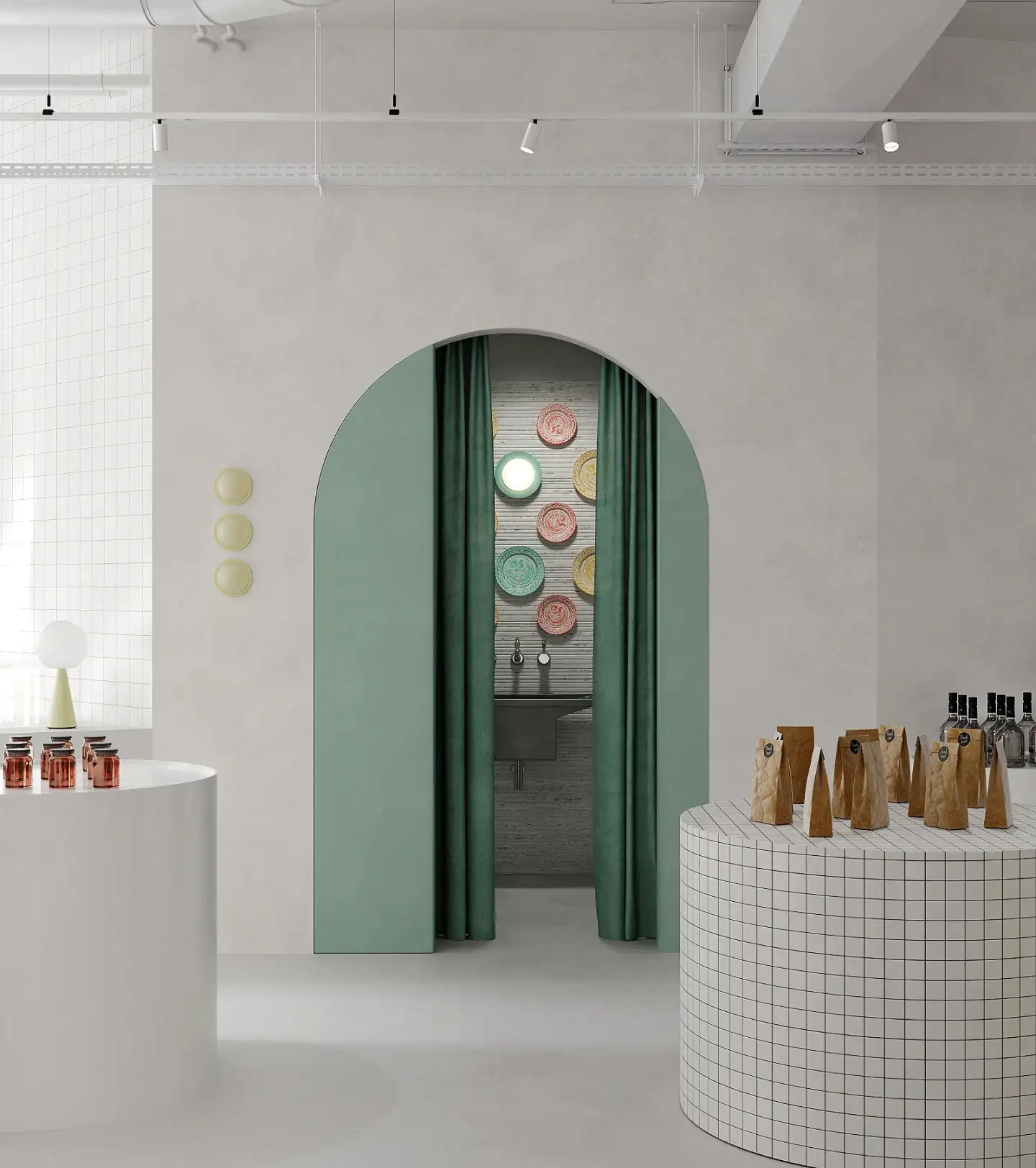
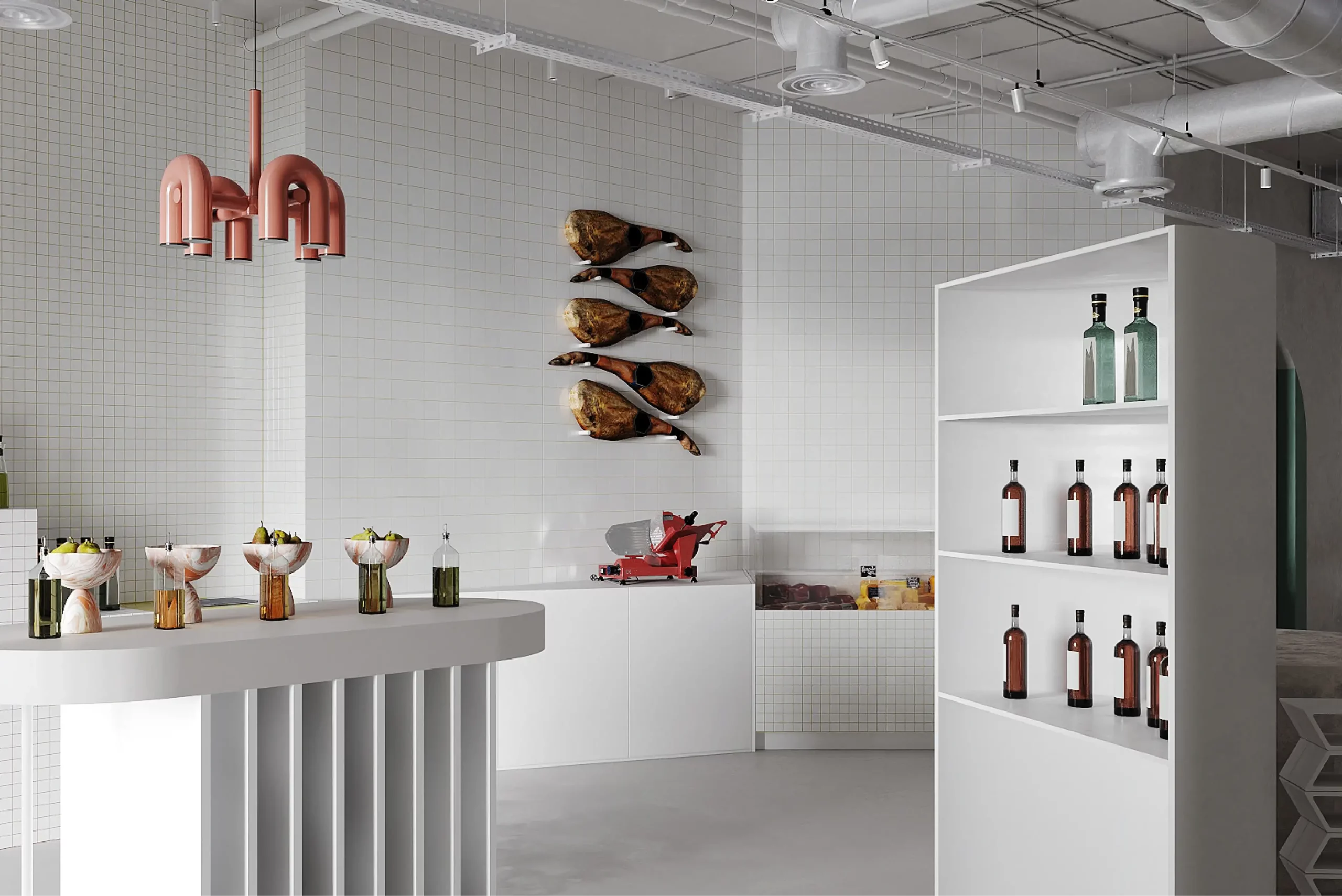
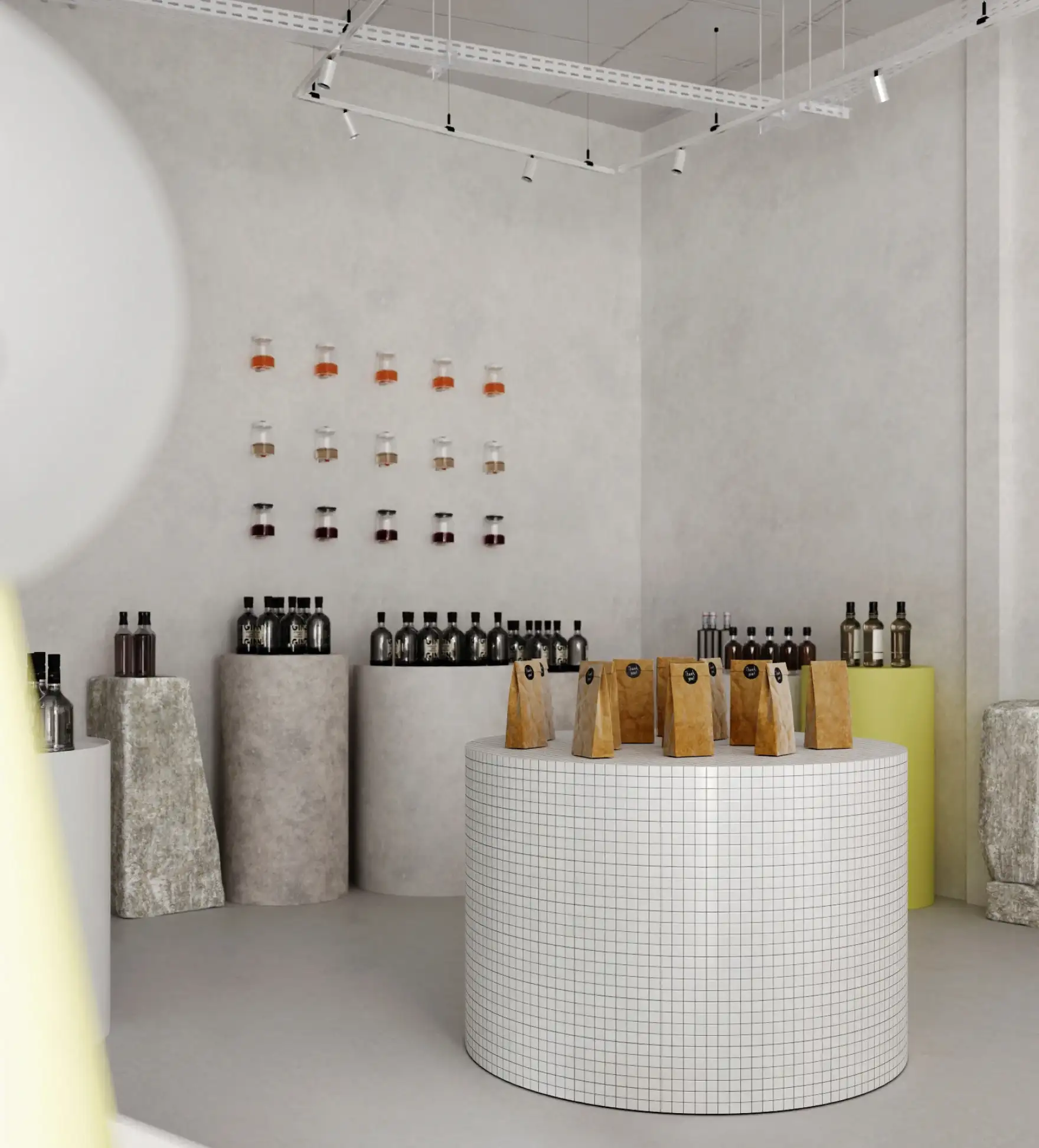
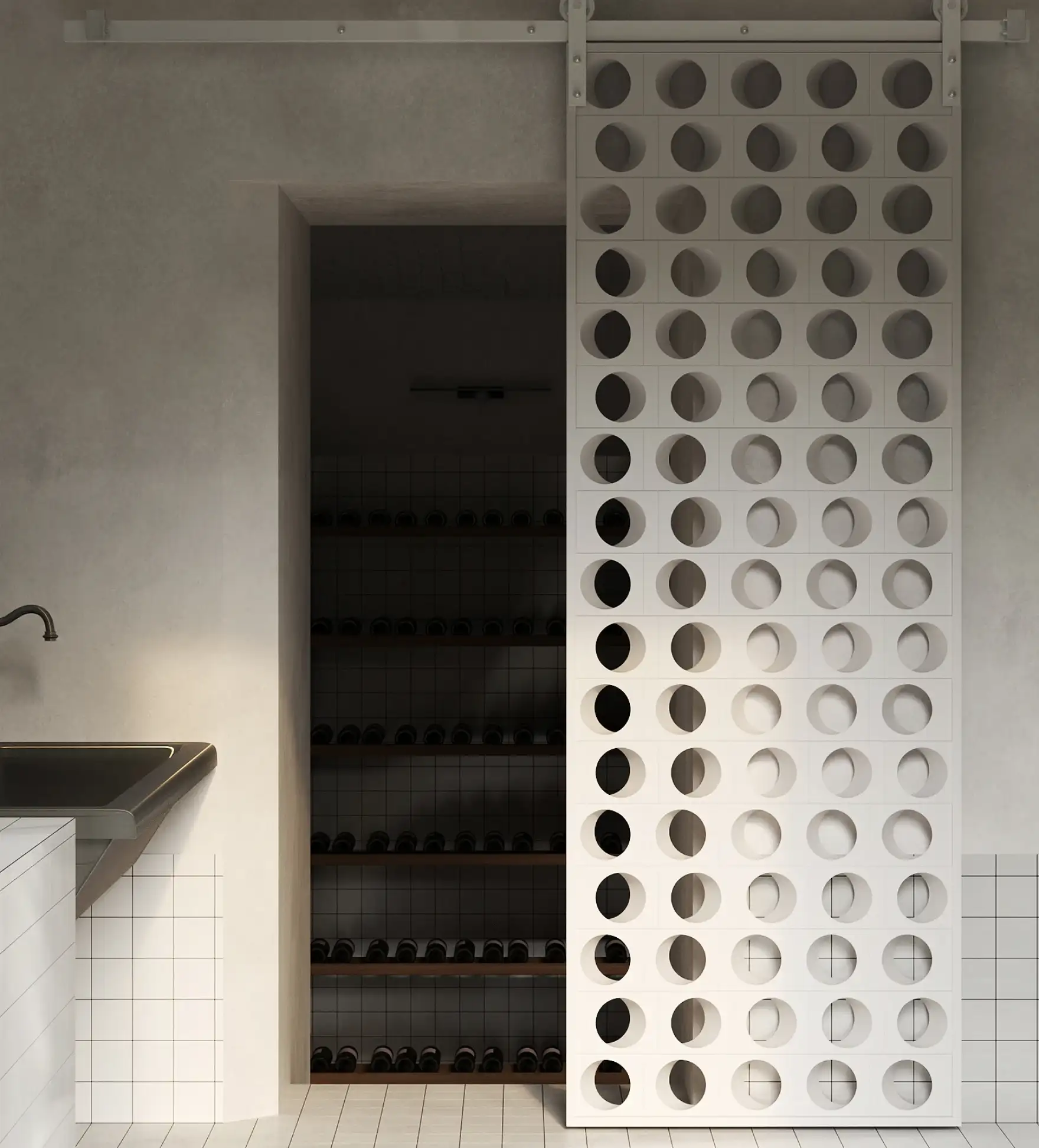
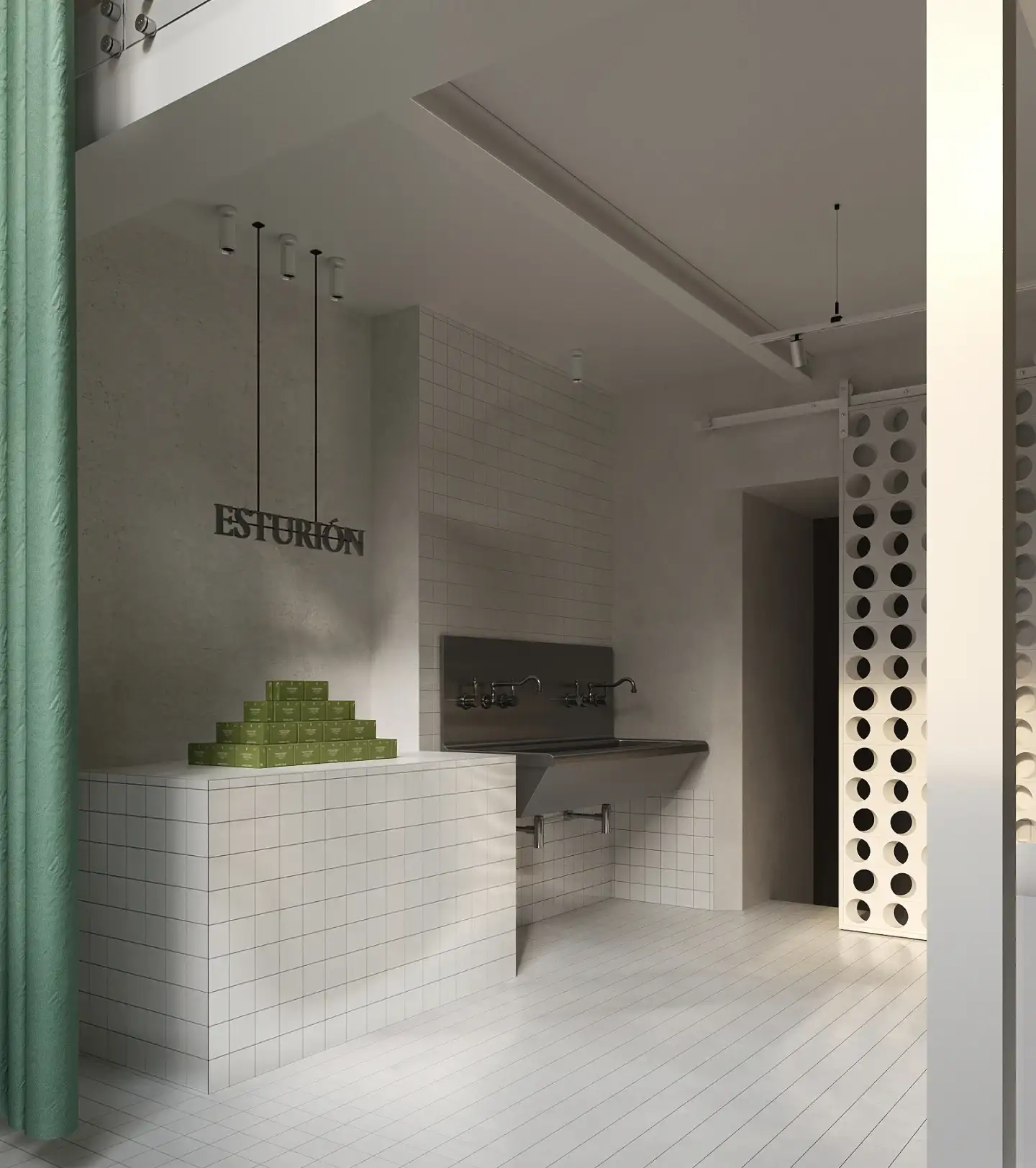
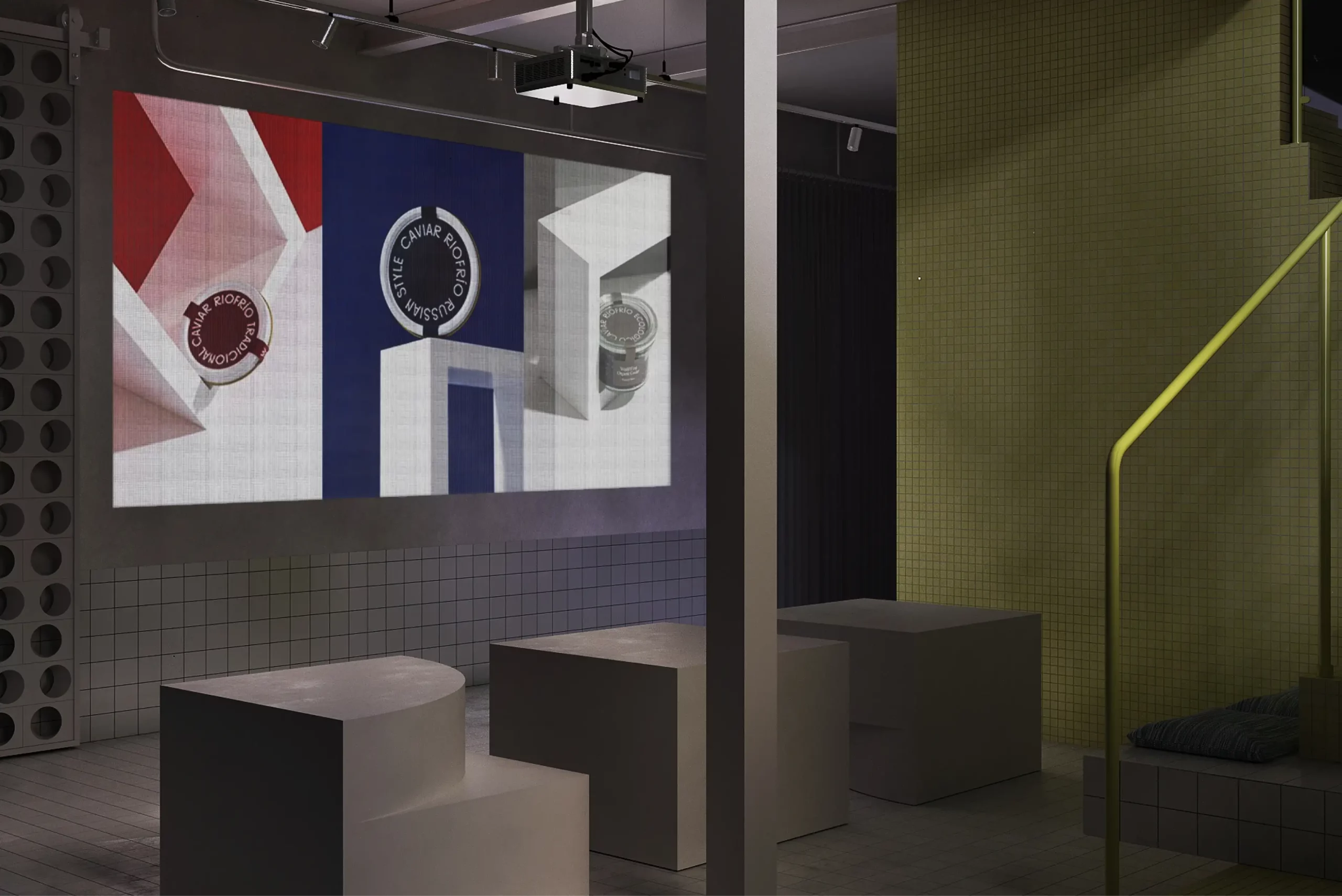
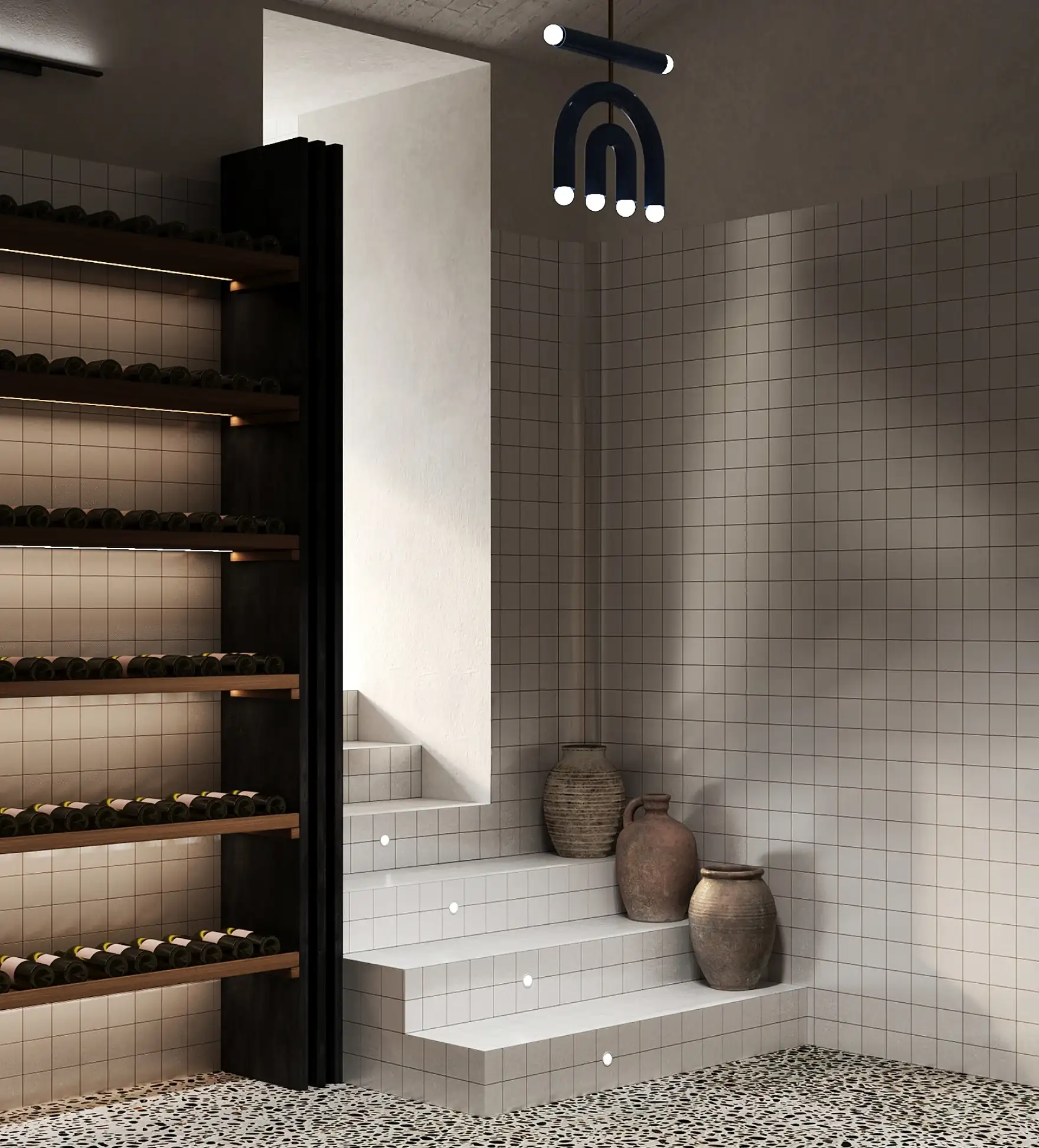
The intervention begins with containment.
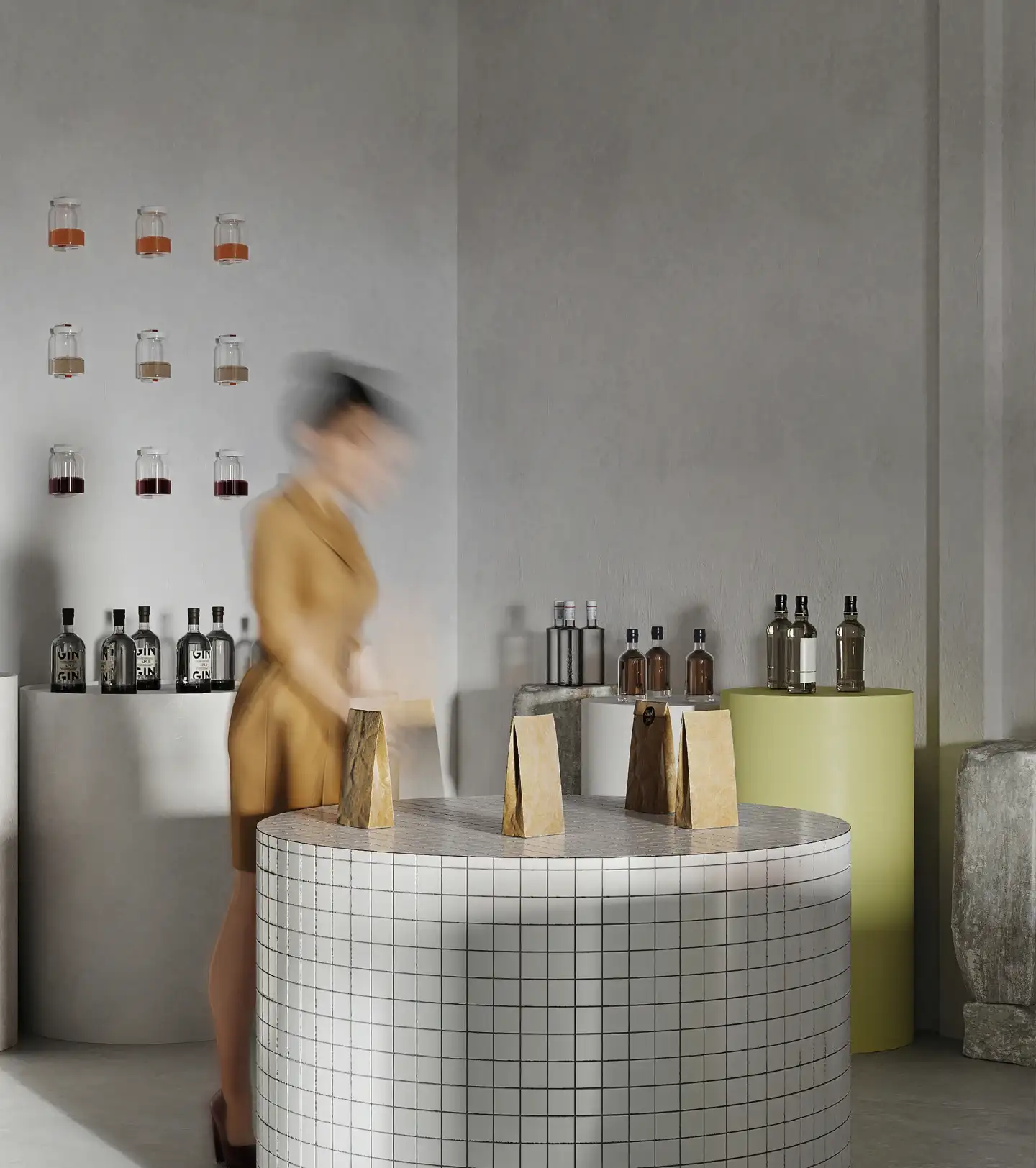
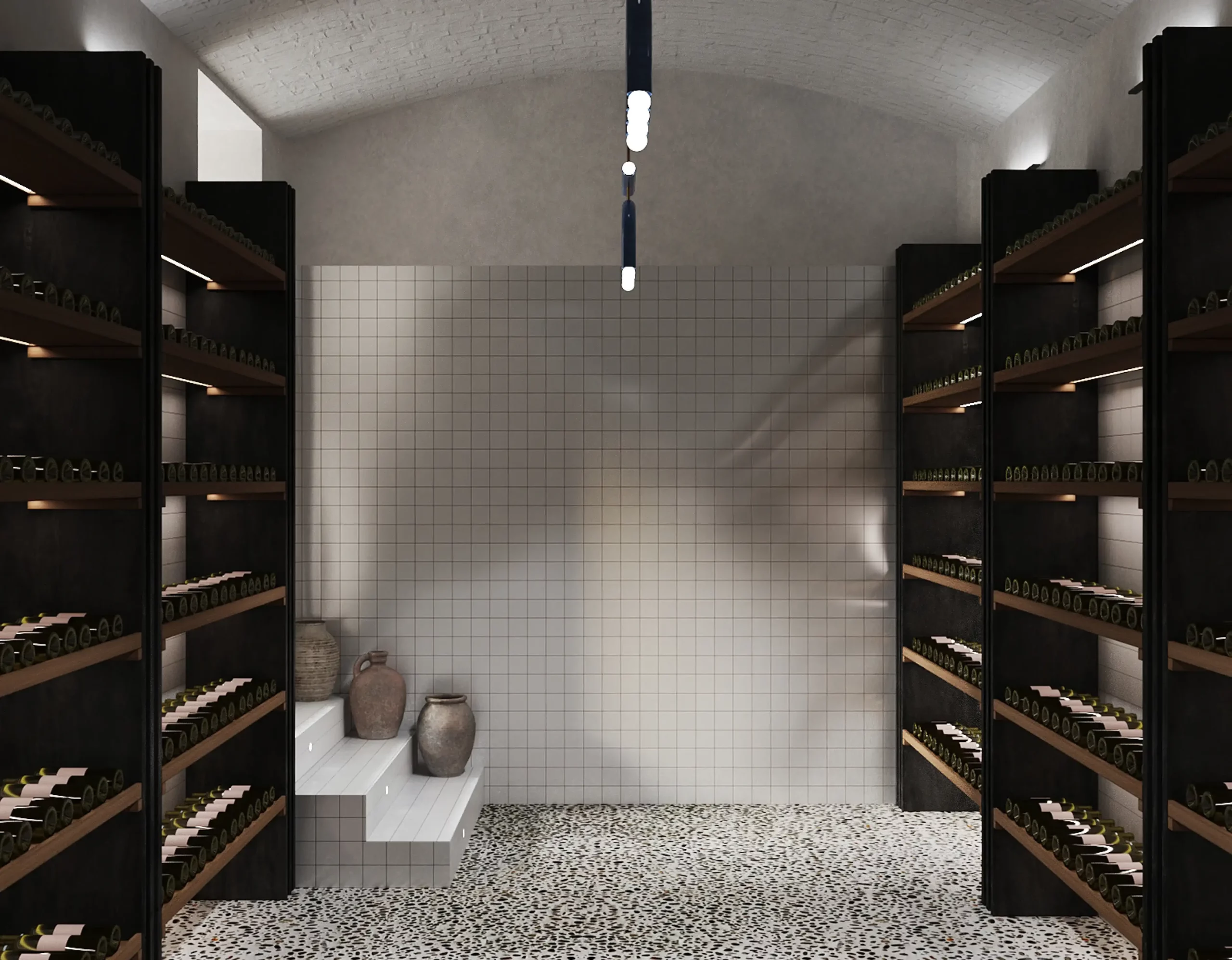
White lime walls, referencing the project's Granadian origins, create a continuous background that softly and homogeneously reflects light. The resin floor, applied artisanally, unifies the space and provides a fluid, almost liquid, aesthetic.
The color palette is deliberately restricted.
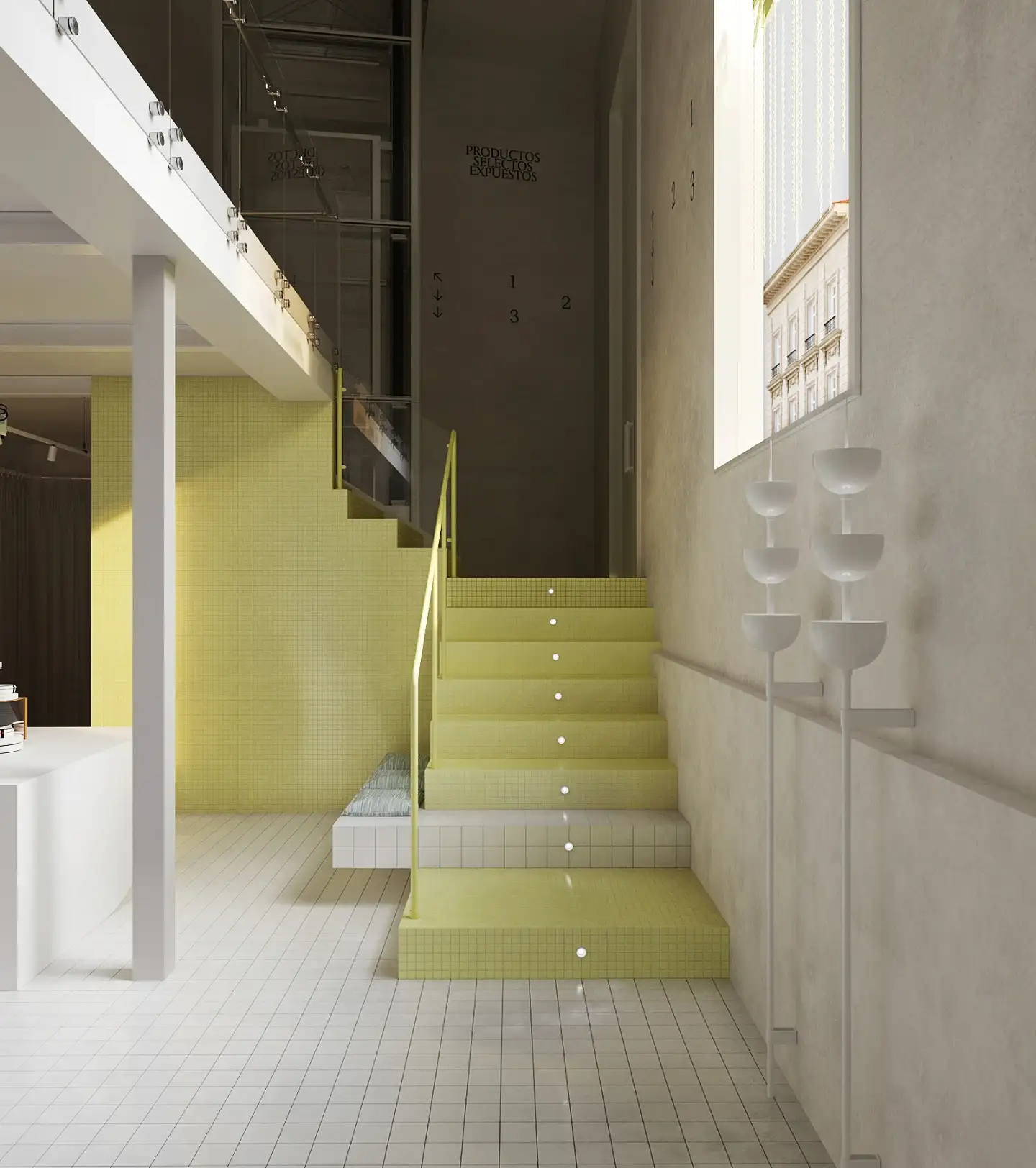
Soft whites, yellows, and washed teals create a calm atmosphere that balances the product's visual intensity.
The space is organized as a sequence of rooms.
Each area is perceived as an independent gallery, where the product is precisely displayed and observed from different perspectives.
The tour includes breaks.
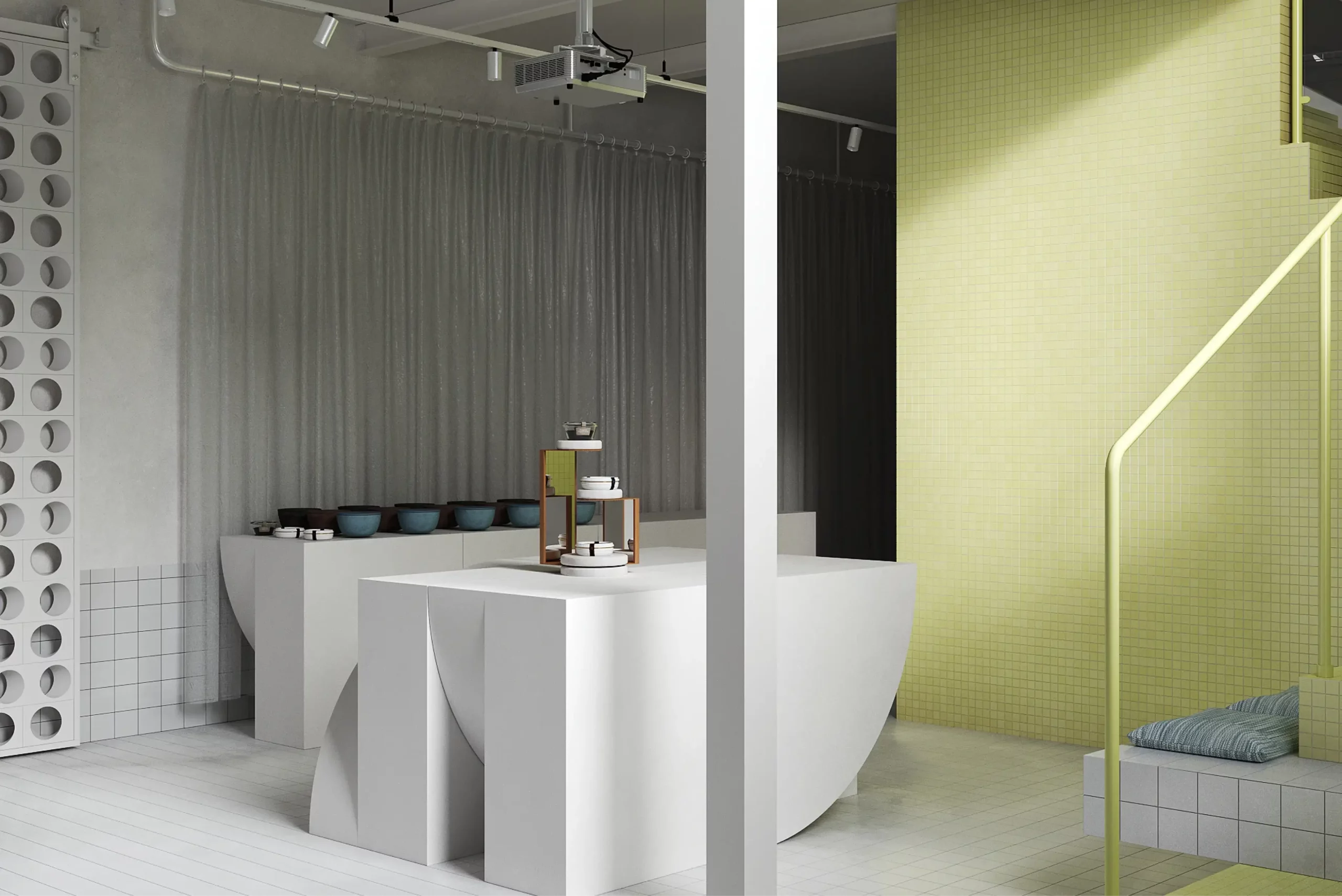
Seating areas allow you to pause, contemplate, and establish a more attentive relationship with the exhibits, moving away from the usual retail pace.
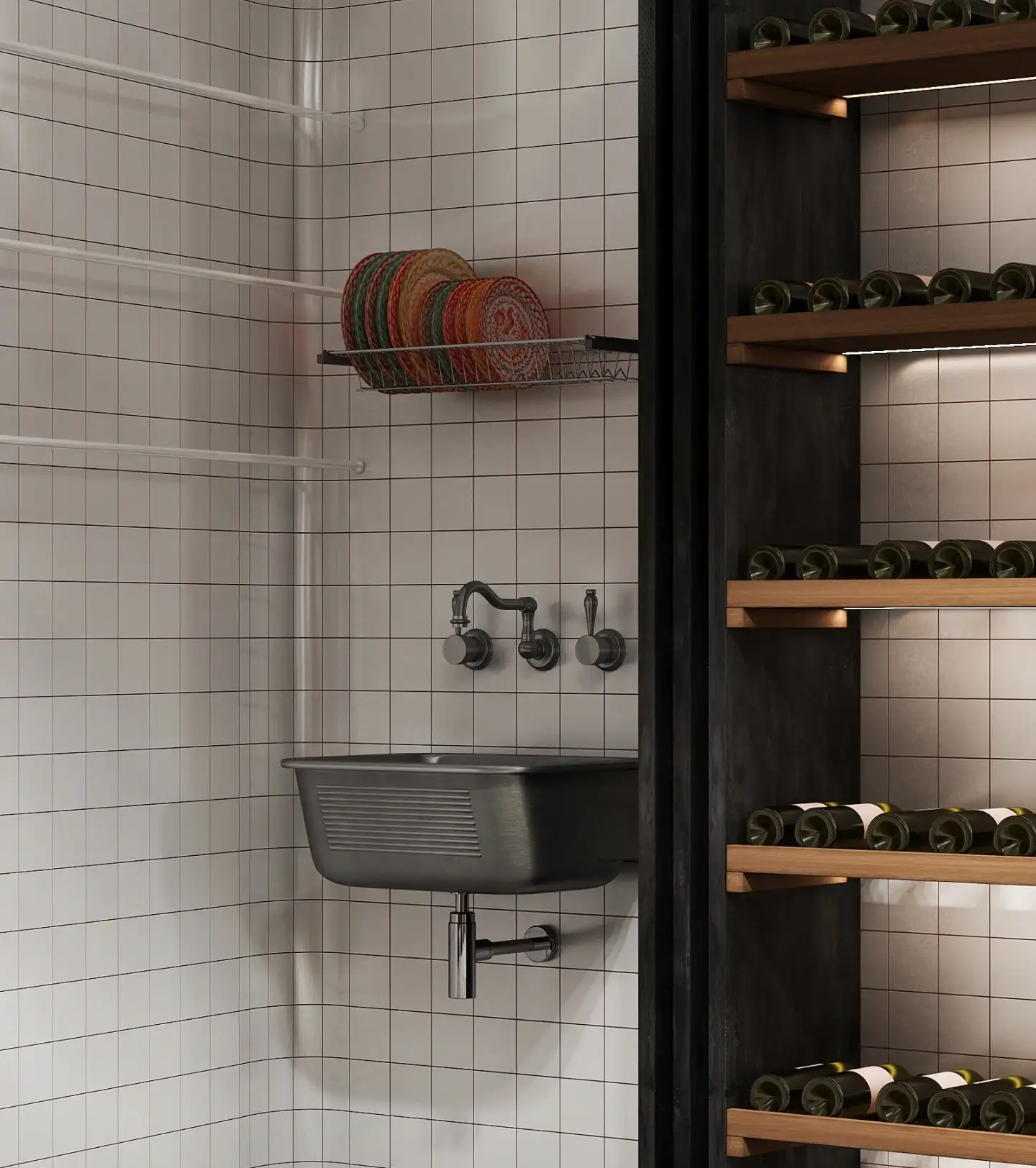
The materials—mosaic, stone, and lacquered metal—are integrated into a precise composition where each element is calibrated to maintain the balance between architecture and product.
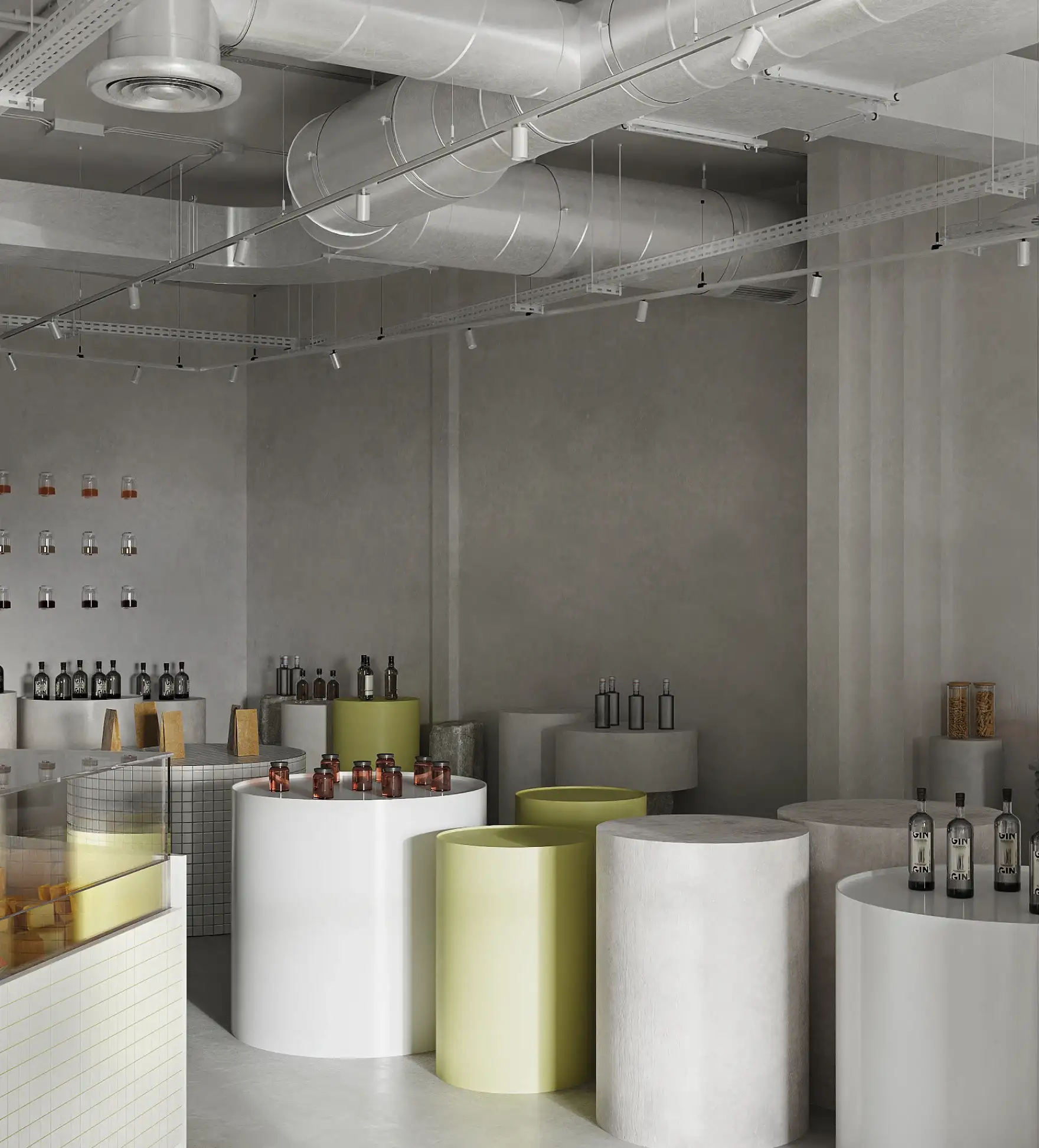
The industrial ceiling introduces contrast.
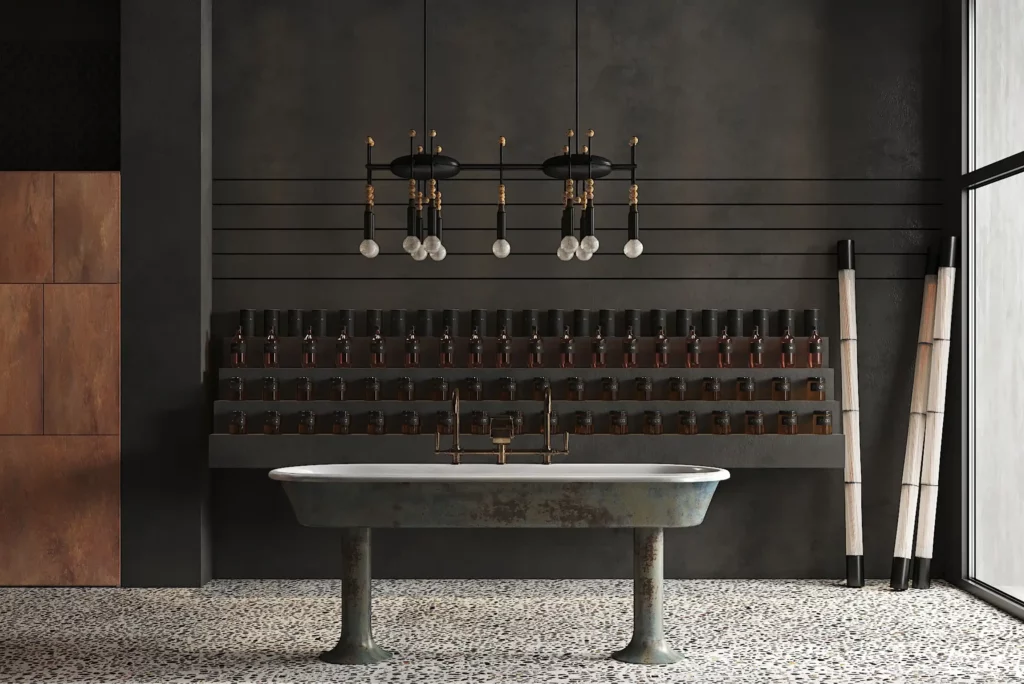
The observed installations dialogue with the cleanness of the space, while the lighting, resolved with an exhibition criterion, constructs scenes and directs the gaze.
The custom-designed furniture follows this logic.
Closer to installation art than commercial equipment, it functions as support and structure for the experience.
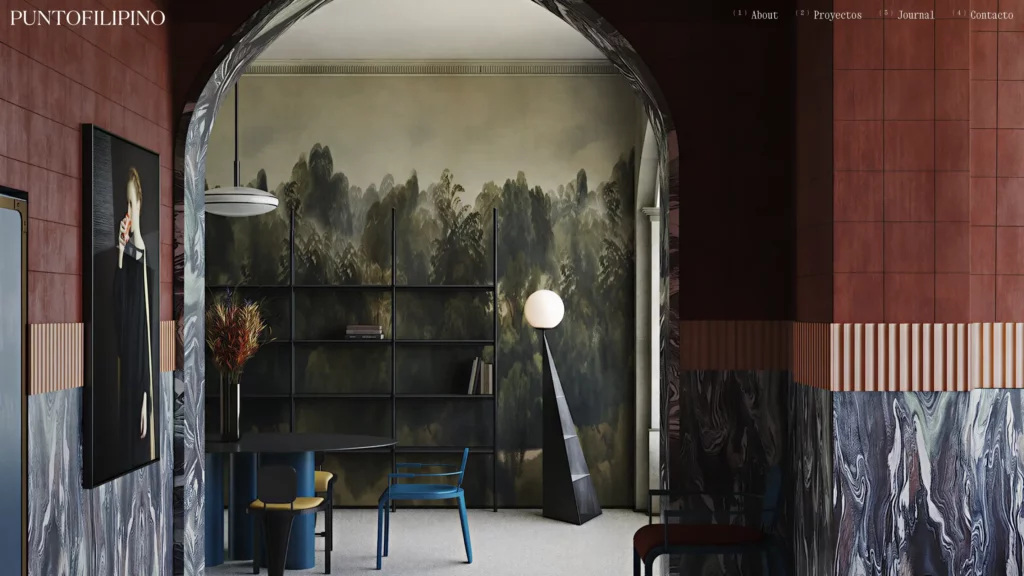
Color accents appear sporadically.
More intense coppery and yellow reflections introduce rhythm and organize perception.
Altelier proposes an environment where product, light, and material are balanced with precision.
A space where observing, choosing, and trying become a curatorial gesture, and where the experience is built from calm and clarity.